

News
Ohio SB 214 goes to DeWine: what it changes for suppressors, SBRs and SBSs
GunSearchEngine·
- news
- Ohio
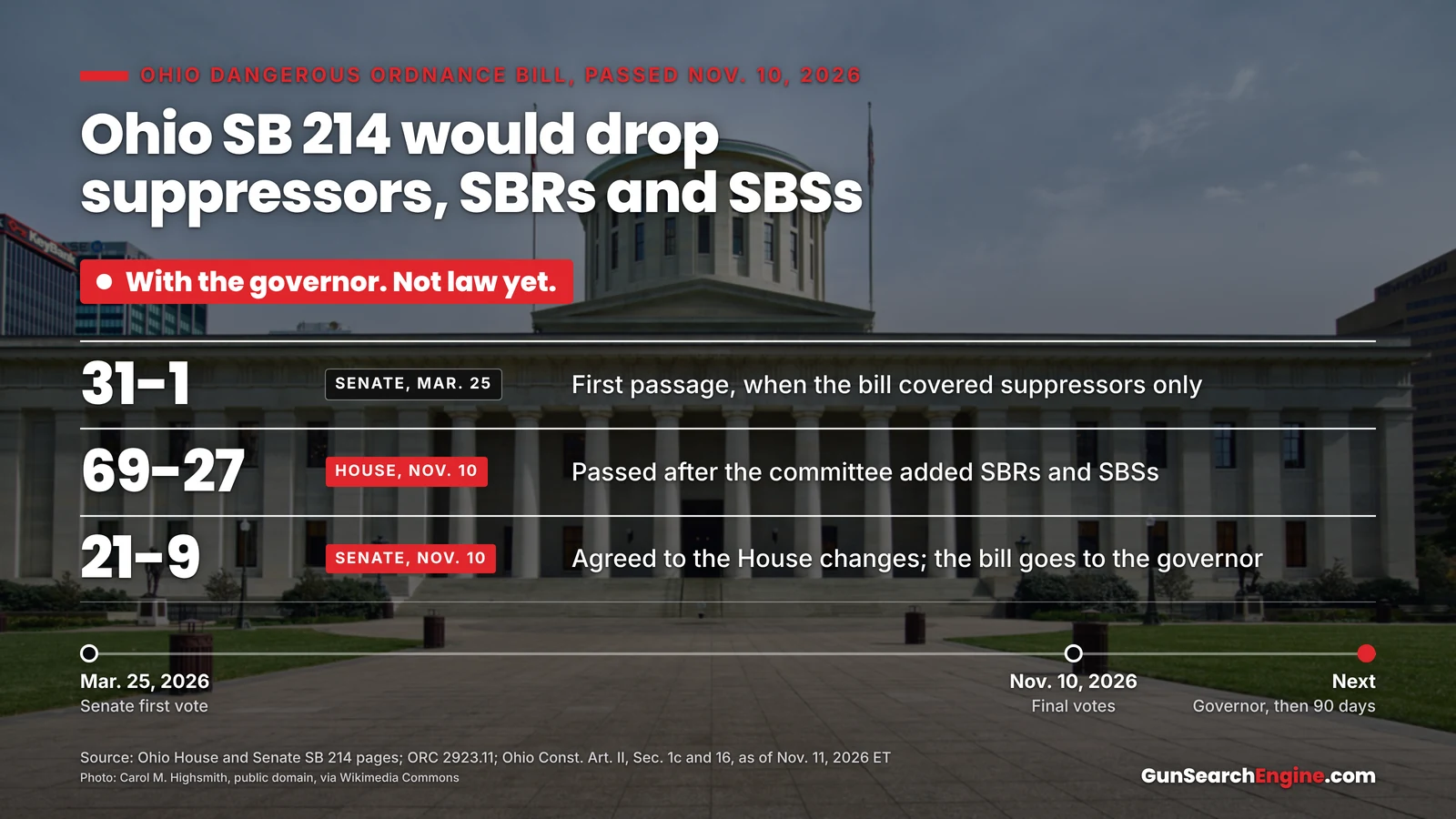
Ohio's Senate Bill 214 cleared its last legislative vote on Nov. 10, 2026, when the Senate agreed to the House's changes 21-9 on the same day the House passed the bill 69-27. The bill, which would take suppressors and short-barreled rifles and shotguns out of Ohio's "dangerous ordnance" law, now goes to Gov. Mike DeWine.
It isn't law yet. Until the governor acts and the effective date arrives, anyone in Ohio who owns a suppressor, or is weighing one of the suppressors listed on GunSearchEngine, is still under the current state rules described below.
What SB 214 changes in Ohio law
Ohio puts certain weapons and accessories in a category called dangerous ordnance, defined in Ohio Revised Code 2923.11, which runs from automatic firearms to high explosives. Two entries on that list matter here: "any firearm muffler or suppressor," and any "sawed-off firearm," which the same section defines as a shotgun with a barrel under 18 inches, a rifle with a barrel under 16 inches, or either one under 26 inches overall. In federal terms, those are the short-barreled shotguns and rifles (SBSs and SBRs) covered by the National Firearms Act.
Under ORC 2923.17, knowingly acquiring, having, carrying or using dangerous ordnance is a fifth-degree felony unless the person fits one of the listed exemptions. One exemption covers owners of dangerous ordnance registered in the National Firearms Registration and Transfer Record (the federal NFA registry); another covers a suppressor on a hunting gun used by a licensed hunter under Ohio's wildlife law. In practice, that registry exemption ties a private owner's standing under Ohio law to federal registration.
The bill text as passed by the House amends ORC 1533.04, 2923.11, 2923.12 and 2923.17, and its long title states the purpose plainly: "to remove firearm mufflers and suppressors and sawed-off firearms from the classification of dangerous ordnance." AmmoLand's Nov. 10 report says the change would end the dependence on federal registration for all three categories, since an item outside the dangerous-ordnance definition no longer needs an exemption under state law.
How the bill got to the governor
Sen. Kyle Koehler is the primary sponsor, according to the Ohio Senate's status page. The Ohio House's official vote record shows the Senate first passed the bill 31-1 on March 25, 2026, when it dealt only with suppressors.
On Nov. 10, the House Public Safety Committee reported a substitute bill on a 9-2 vote, and Buckeye Firearms Association, which backed the bill, said the committee amended it to add short-barreled rifles and shotguns. The full House passed it 69-27 that day, a vote BFA described as bipartisan, and the Senate then concurred in the House amendments 21-9, which ended the legislature's work on it.
What the bill leaves in place
SB 214 is a state bill, so it can't change the National Firearms Act or any other federal law. AmmoLand's Nov. 10 report says it would not remove federal requirements such as applicable background checks and interstate transport approval for certain short-barreled firearms, and that the change does not extend to "any other weapons" (AOWs), the separate NFA category.
The long title names only suppressors and sawed-off firearms, so automatic firearms, explosives and the other dangerous-ordnance categories aren't among the changes it lists.
What happens next, and when it could take effect
Under Article II, Section 16 of the Ohio Constitution, the governor can sign the bill or veto it; a bill he doesn't return within ten days after it's presented to him, Sundays excepted, becomes law without his signature. Each chamber can override a veto with a three-fifths vote of its elected members.
Once the bill is law, Article II, Section 1c sets the clock: a law passed by the General Assembly takes effect 90 days after the governor files it with the secretary of state, and a valid referendum petition filed within those 90 days would hold it until voters decide. The House-passed text carries no emergency clause, so the 90-day rule applies.
For now, an Ohio owner's state-law position is the same as it was before Nov. 10: a suppressor, SBR or SBS is dangerous ordnance under ORC 2923.11, and the exemptions in ORC 2923.17 decide whether having one is lawful. The governor's action will show up on the Ohio House status page for SB 214, and the 90-day count starts from that filing.
Sources
- Ohio Senate, SB 214 (136th General Assembly) status
- Ohio House, SB 214 status
- Ohio House, SB 214 votes (Senate 31-1, Mar. 25; House Public Safety 9-2, House 69-27 and Senate concurrence 21-9, Nov. 10)
- Ohio General Assembly, Sub. S.B. 214 as passed by the House (PDF)
- Ohio Revised Code 2923.11, weapons control definitions
- Ohio Revised Code 2923.17, unlawful possession of dangerous ordnance
- Ohio Constitution, Article II, Section 16
- Ohio Constitution, Article II, Section 1c
- Buckeye Firearms Association, Nov. 10, 2026
- AmmoLand, Nov. 10, 2026
Where to shop
Shop the hubs
Browse live stock, or list inventory if you sell.
Related posts
November 13, 2026
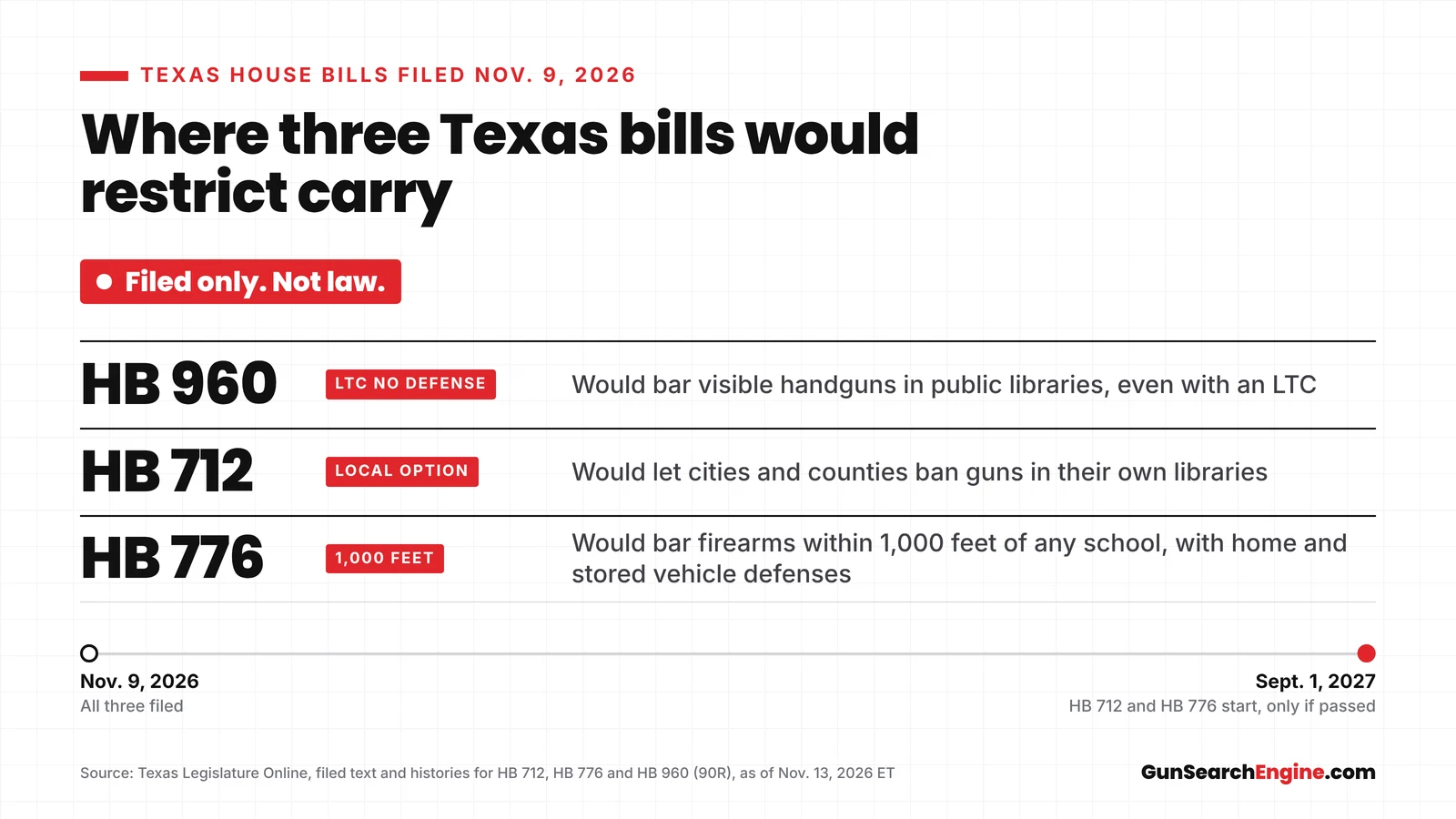
How Texas's new carry bills would restrict where you can carry: HB 712, HB 776 and HB 960
Three Texas House bills filed Nov. 9 would restrict carry in libraries and within 1,000 feet of schools. None is law yet; each is filed only.
- news
- Texas
November 12, 2026
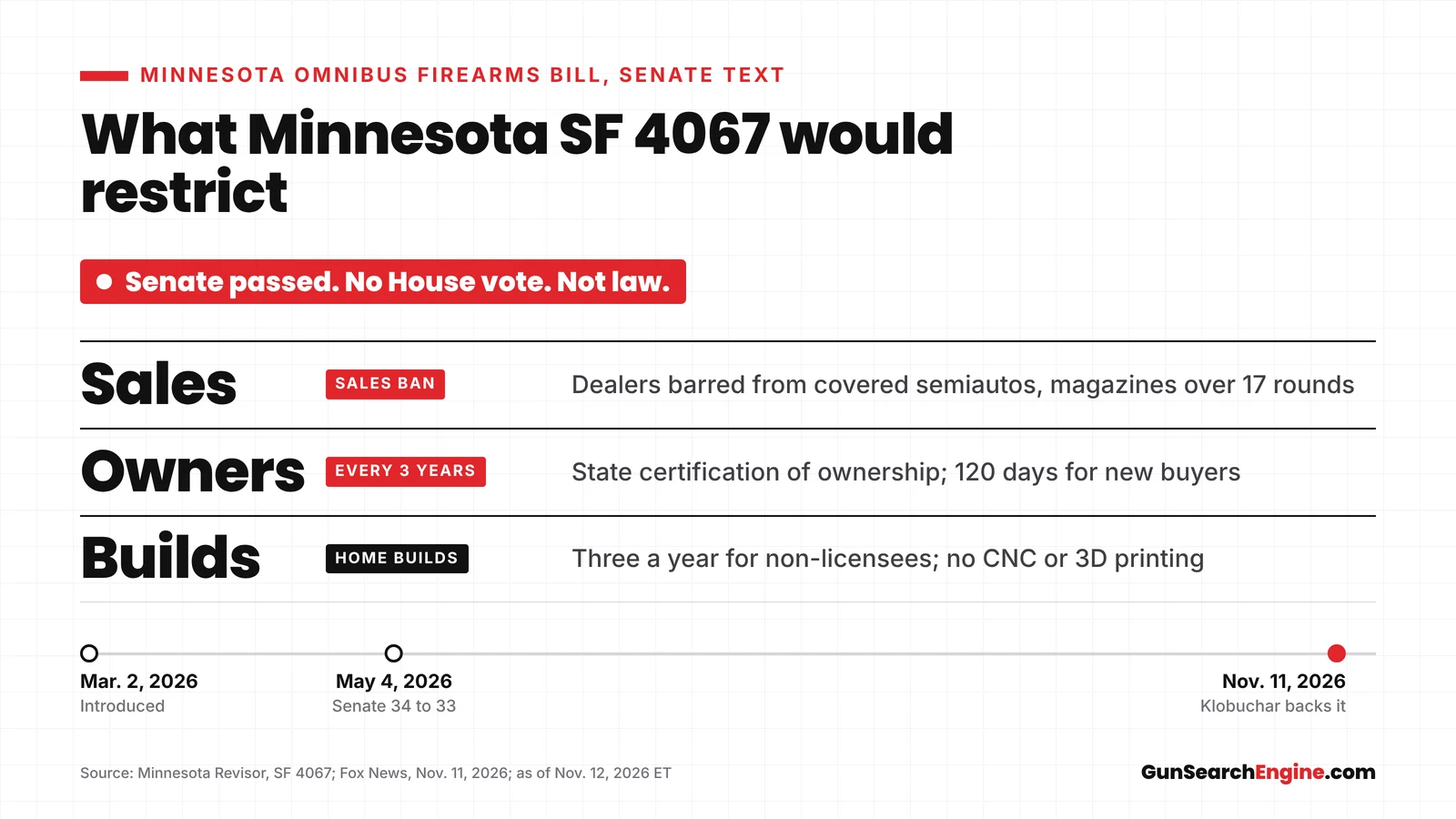
Klobuchar backs SF 4067: how Minnesota's gun bill would restrict buyers and owners
SF 4067 isn't law: Minnesota's Senate passed it 34-33 in May, with no House vote. What it would bar dealers from selling and require of current owners.
- news
- Minnesota
November 10, 2026
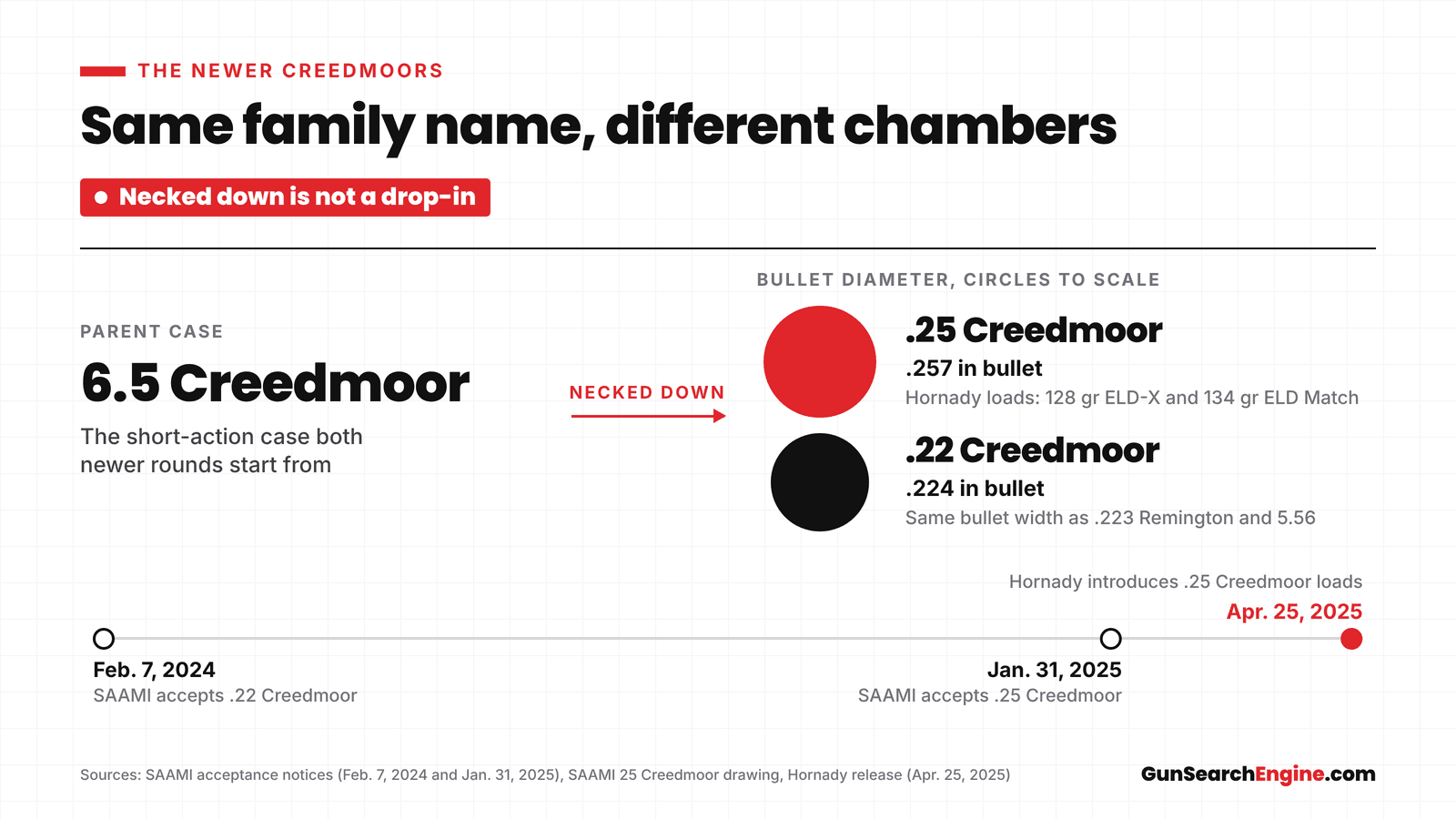
.25 Creedmoor and .22 Creedmoor Explained: The Newer Creedmoors
.25 and .22 Creedmoor start from the 6.5 Creedmoor case, necked down. What changed, why you can't swap them, and how to pick the right one.
- rifle ammo
- Creedmoor
- explainers
November 10, 2026
5.7x28 Explained: The Round, the Guns, the Tradeoffs
What 5.7x28 is, which pistols and carbines shoot it, and what you trade versus 9mm: soft recoil and a flat path for a long case and fewer loads.
- handgun ammo
- 5.7x28
- explainers
November 10, 2026
6.5 Creedmoor vs 6.5 PRC vs 6.5 Grendel: What's the Difference?
Compare 6.5 Creedmoor, 6.5 PRC and 6.5 Grendel by case, recoil, ammo shelf and the rifles chambered in each, and see which one to buy for deer.
- rifle ammo
- 6.5 Creedmoor
- explainers
November 10, 2026
7.62x39 Explained: FMJ, Hunting Loads and What Shoots It
What 7.62x39 is, why FMJ and hunting loads do different jobs, which rifles shoot it, and why it isn't the same round as 7.62x51 or .308.
- rifle ammo
- 7.62x39
- explainers
November 10, 2026
9mm Carbines (PCCs) Explained: Why a Rifle in a Pistol Caliber
A pistol caliber carbine is a shouldered gun that shoots pistol ammo, usually 9mm. Why that's useful, what you give up, and where to look next.
- guns
- 9mm
- explainers
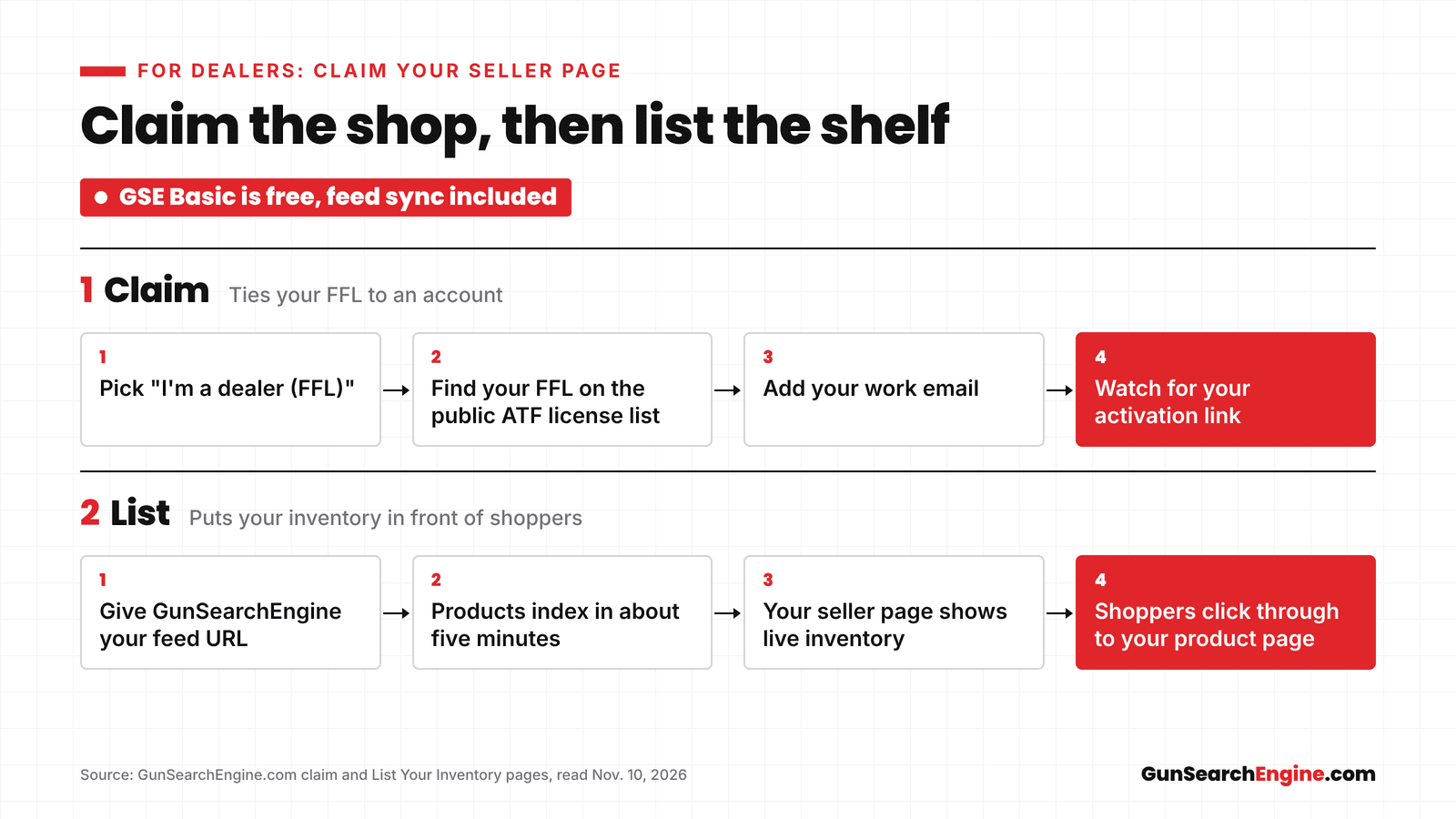
November 10, 2026
How to Claim Your Gun Store Listing on GunSearchEngine
Claim your gun store on GunSearchEngine with the public ATF license list, add the feed you already use, and send shopper clicks to your own product pages.
- for dealers
- seller pages
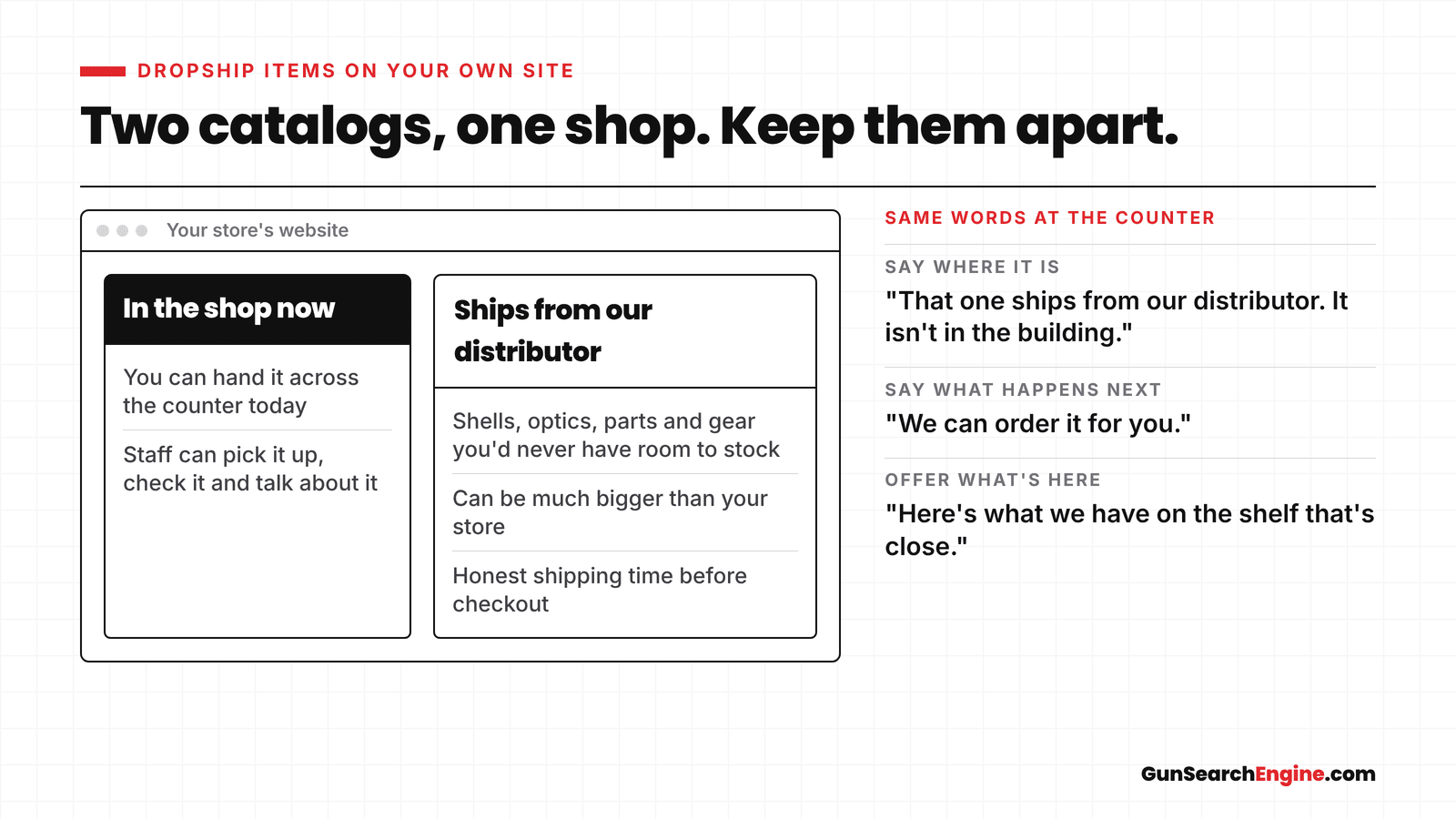
November 10, 2026
Selling Dropship Items Without Confusing Walk-In Customers
How to sell dropship or catalog items on your gun store website without sending walk-in customers after a gun that isn't on the shelf.
- for dealers
- dropship
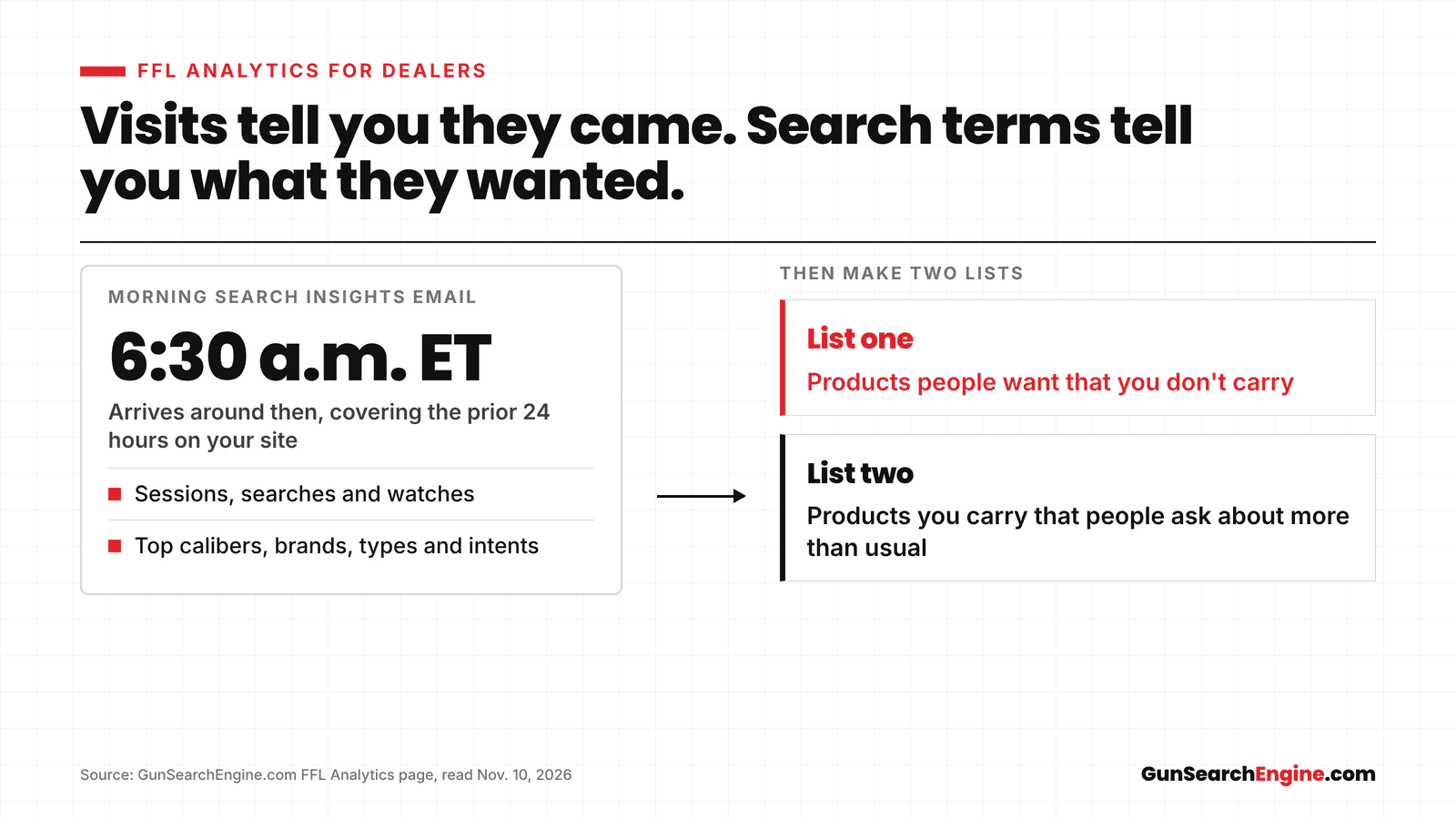
November 10, 2026
What FFL Analytics Shows a Dealer About What Shoppers Want
FFL Analytics shows the calibers and products shoppers type on your gun store site, including ones you don't carry. What it shows and how to use it.
- for dealers
- FFL Analytics
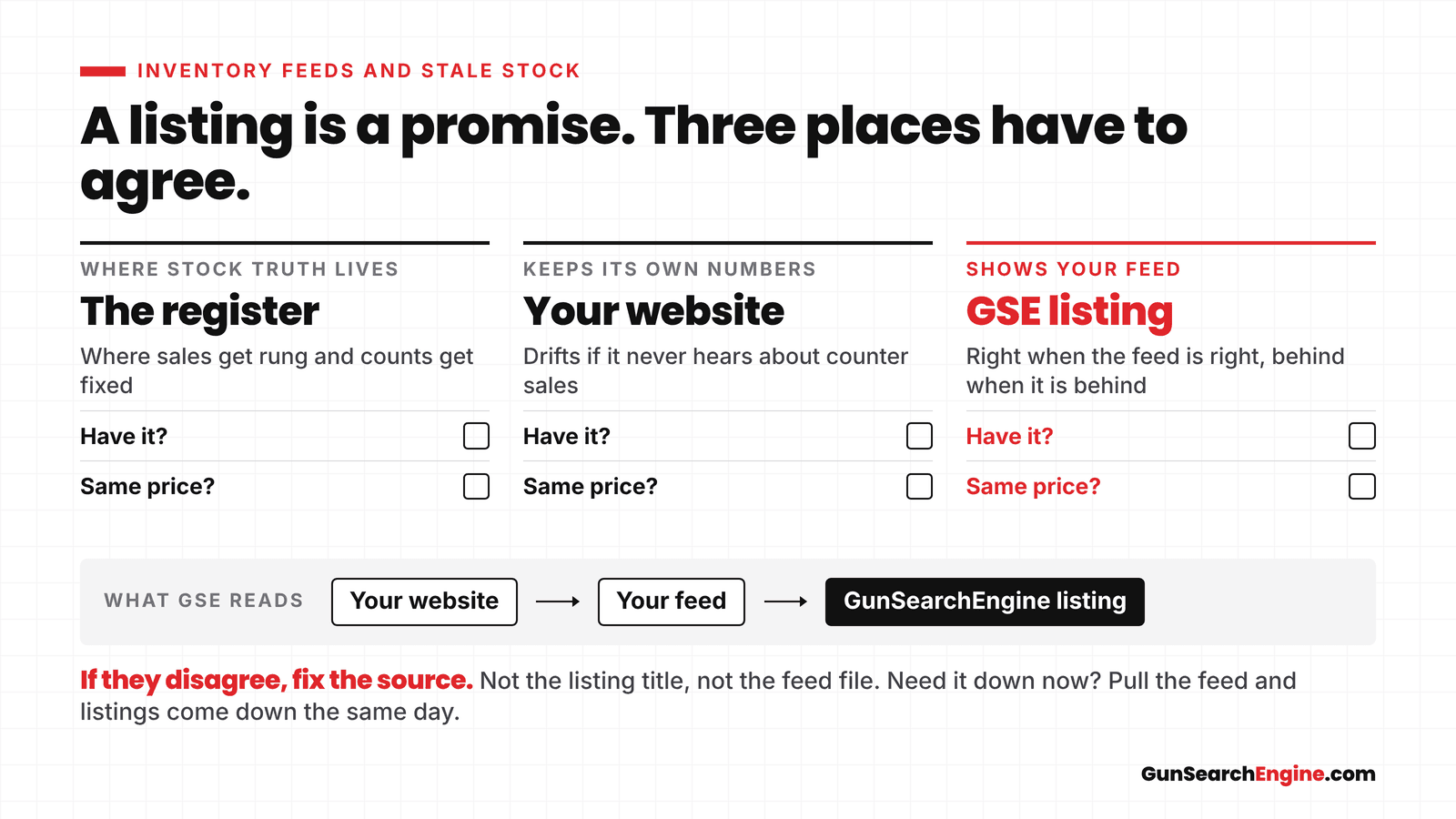
November 10, 2026
Keep Your Listings Honest: Inventory Feeds and Stale Stock
Why gun store listings go stale, how a product feed is supposed to work, and what to do when the register and the website don't agree.
- for dealers
- inventory feeds
November 10, 2026
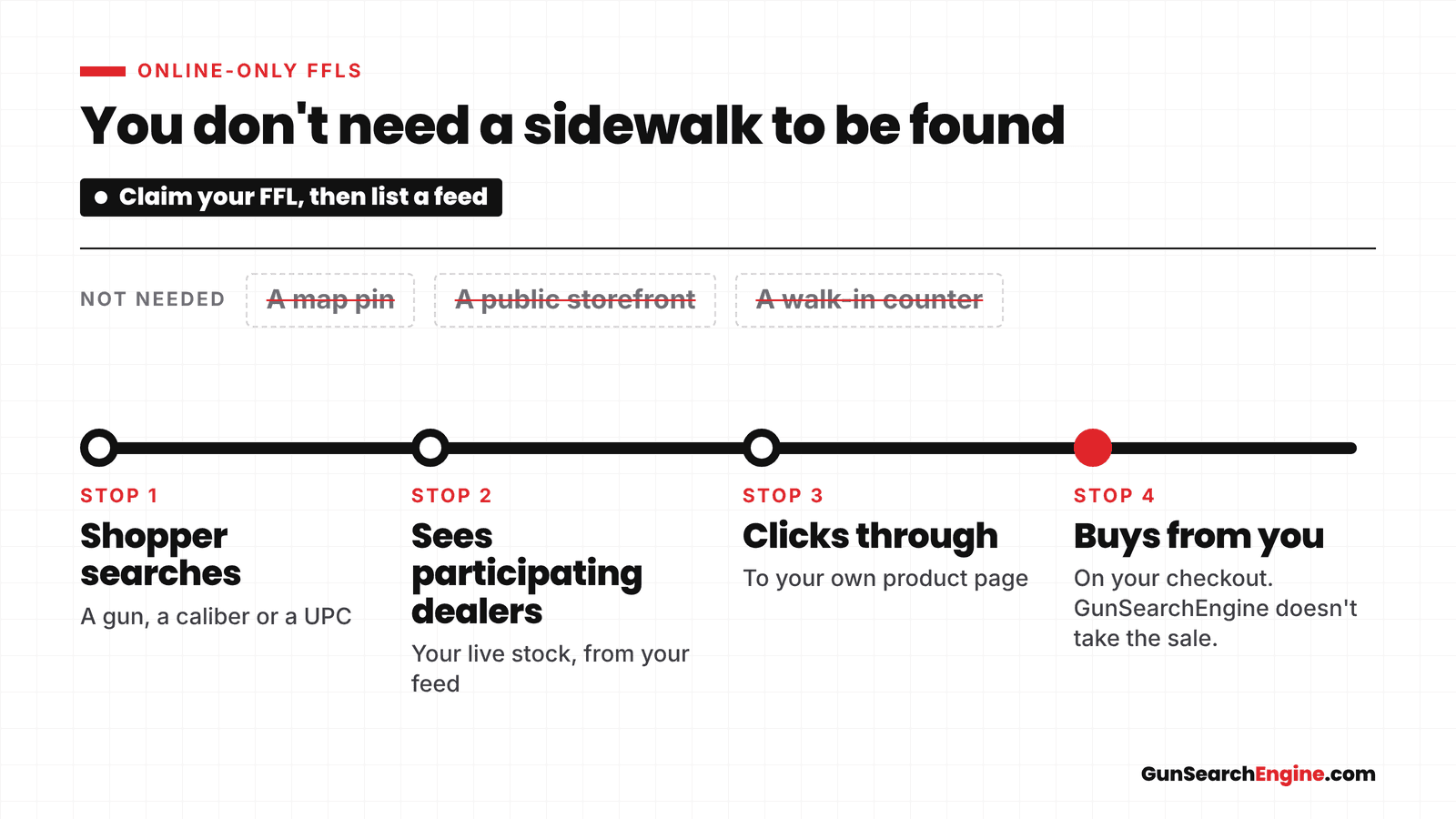
Online-Only FFL? How to Get Listed and Found Without a Storefront
How an online-only FFL can claim a GunSearchEngine listing, publish an inventory feed, and get found without a walk-in storefront.
- for dealers
- online-only FFLs
November 10, 2026
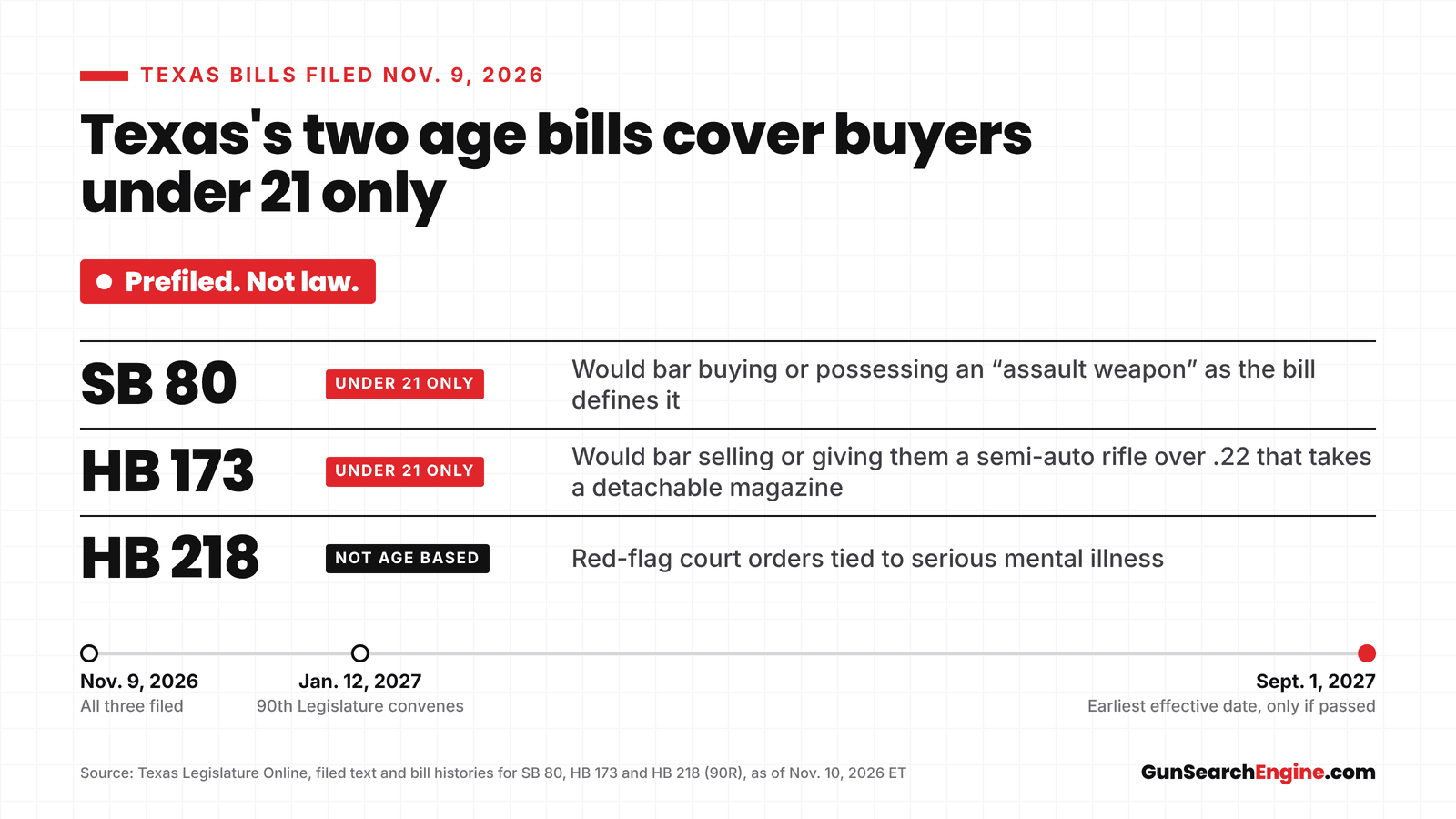
How Texas's new gun bills would restrict buyers: SB 80, HB 173 and HB 218
SB 80, HB 173 and HB 218 are prefiled Texas bills, not law. The age bills deal only with under-21 buyers and sales to them. What the filed text says.
- news
- Texas
November 10, 2026
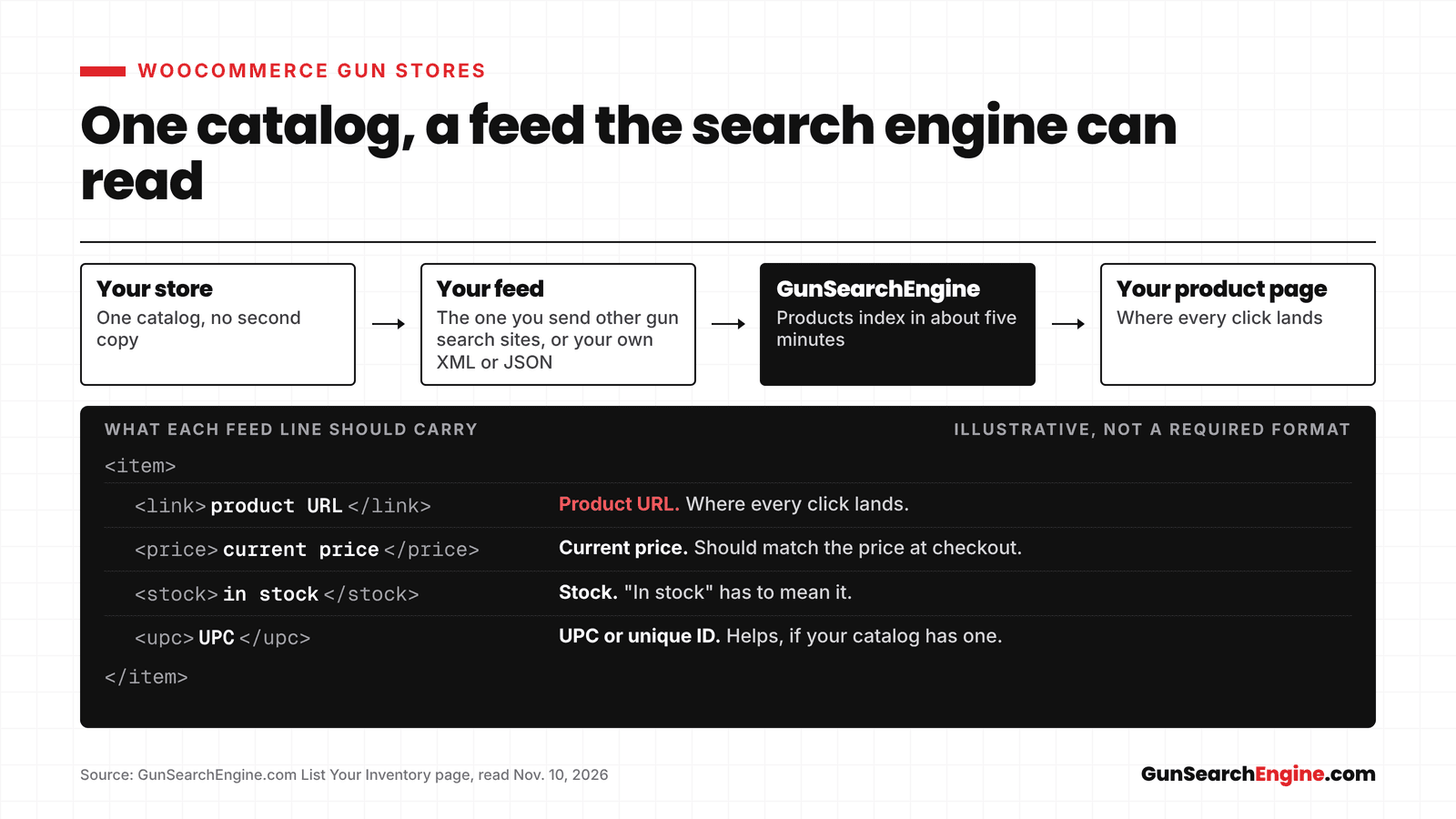
WooCommerce Gun Stores on GunSearchEngine: Getting Your Catalog Listed
How a WooCommerce gun store gets its catalog on GunSearchEngine, using a feed you may already send to other search sites, or your own XML or JSON.
- for dealers
- WooCommerce
October 29, 2026
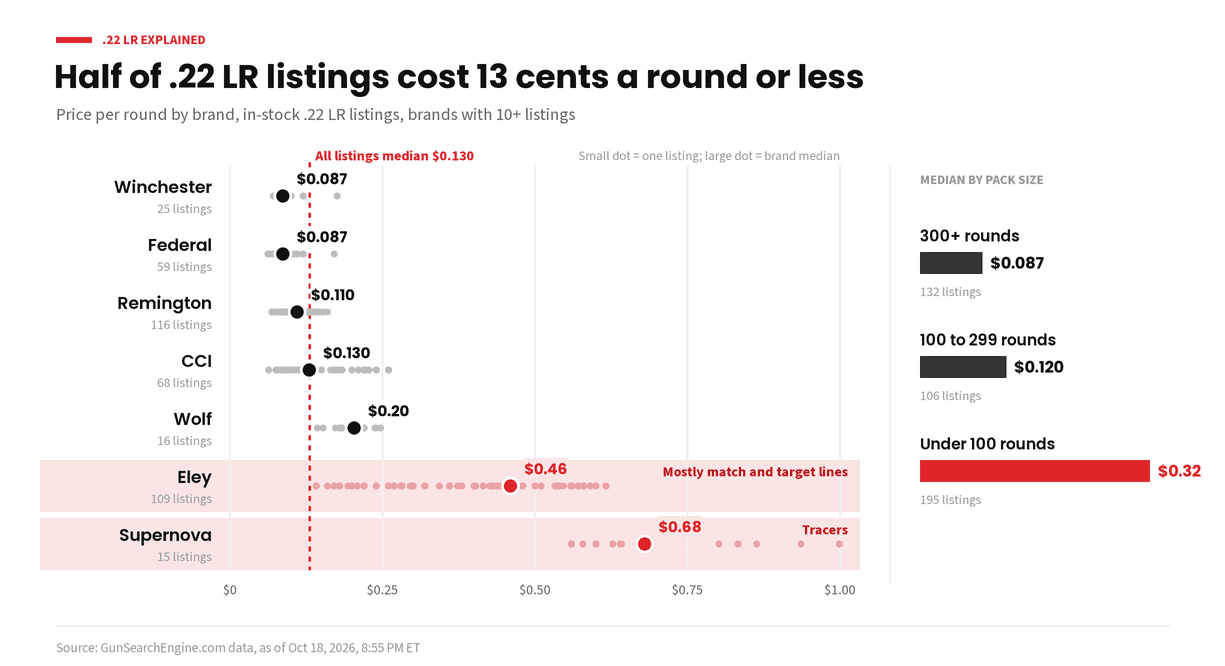
.22 LR Explained: What It's Good For and How to Choose Loads
The .22 LR is one of the most common rounds to learn on. Here is what it is, what it is good for, and how subsonic, standard and high velocity loads differ.
- rimfire
- .22 LR
- explainers
October 29, 2026
300 Blackout Explained: Supersonic, Subsonic and What Shoots It
The 300 Blackout puts a .30 caliber bullet in a rifle built around 5.56 parts. Here is how supersonic and subsonic loads differ, what shoots it, and the safety rule every owner needs.
- rifle ammo
- 300 Blackout
- explainers
October 29, 2026
.32 ACP Explained: The Small Pistol Round That's Still Around
The .32 ACP is an old pocket pistol round that never quite went away. Here is what it is, what shoots it, and who it still makes sense for.
- handgun ammo
- .32 ACP
- explainers
October 29, 2026
.380 ACP vs 9mm for Everyday Carry: What's the Difference?
The .380 ACP and the 9mm use bullets of about the same width, but they are not the same round. Here is how they compare for everyday carry, from recoil to pistol size.
- handgun ammo
- .380 ACP
- 9mm
- concealed carry
- comparisons
October 29, 2026
.40 S&W vs 9mm: What's the Difference?
The .40 S&W and the 9mm are two of the most common pistol rounds. Here is how they differ in size, recoil and capacity, and why so many shooters have moved to 9mm.
- handgun ammo
- .40 S&W
- 9mm
- comparisons
October 29, 2026
.45 ACP vs 9mm: What's the Difference?
Big and slow vs small and fast. Here is how the .45 ACP and the 9mm compare on bullet size, recoil, capacity and practice, and who each one suits.
- handgun ammo
- .45 ACP
- 9mm
- comparisons
October 29, 2026
.50 AE Explained: The Biggest Common Pistol Round
The .50 Action Express is the round behind the big Desert Eagle pistol. Here is what it is, what shoots it, and what to expect if you want to try one.
- handgun ammo
- .50 AE
- explainers
October 29, 2026
What FBI Background Check Numbers Do and Don't Tell You
Monthly FBI background check counts get quoted as gun sales. They are not. Here is what the numbers count, what they leave out, and how to read them.
- data
- background checks
- explainers
October 29, 2026
FMJ vs Hollow Point: What's the Difference?
Full metal jacket and hollow point bullets are built for different jobs. Here is how each one works, when to use which, and why many shooters practice with one and carry the other.
- handgun ammo
- 9mm
- bullet types
- comparisons
October 29, 2026
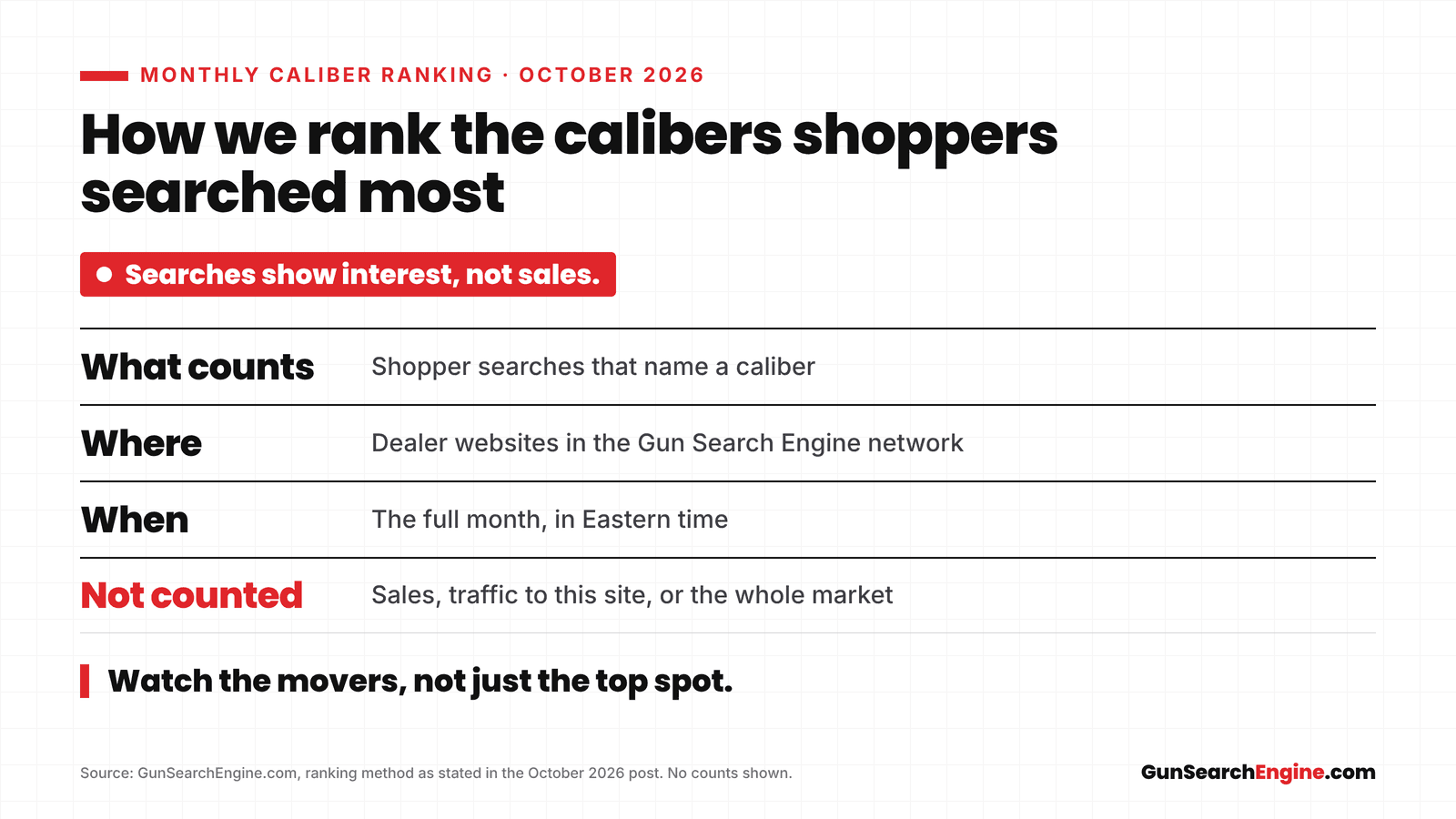
What Calibers Shoppers Searched Most in October 2026
A monthly ranking of the calibers shoppers searched for most on participating dealer sites. What the ranking measures, what it does not, and how to use it.
- data
- calibers
- monthly ranking
October 29, 2026
Rimfire vs Centerfire Suppressors: What's the Difference?
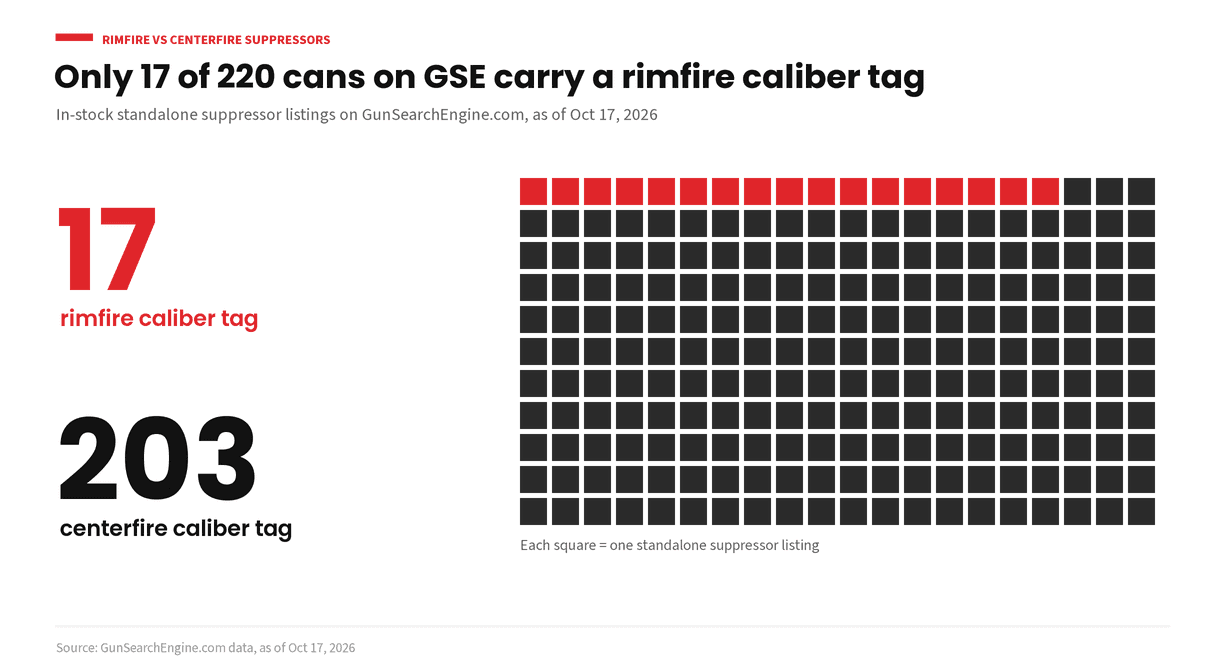
Why rimfire and centerfire suppressors are built differently, why a .22 LR can is a common first can, when a centerfire can makes more sense, and what to ask your dealer. Per ATF guidance as of October 2026.
- suppressors
- nfa
- rimfire
- .22 LR
October 29, 2026
Shotgun Shells Explained: Birdshot, Buckshot and Slugs
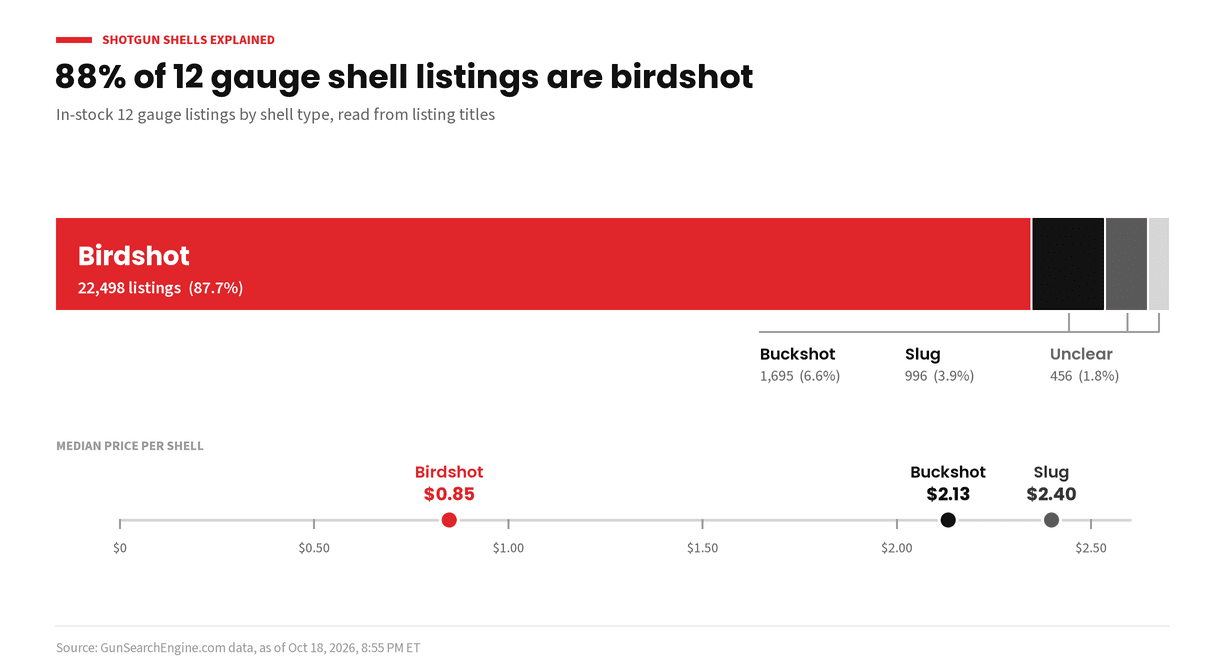
Birdshot, buckshot and slugs do very different jobs. Here is what each shotgun shell is for, how shot sizes work, and what to check on your barrel before you buy.
- shotgun ammo
- 12 gauge
- explainers
October 29, 2026
Solvent Traps vs Suppressors: What's the Difference?
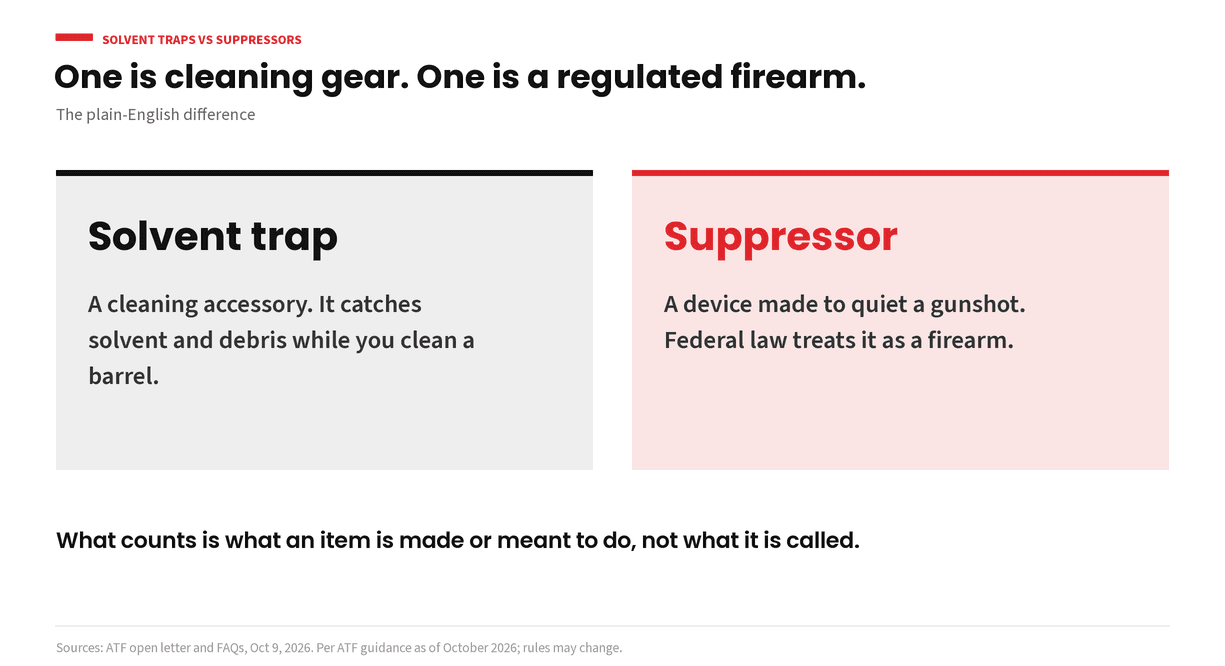
A solvent trap is cleaning gear. A suppressor is a device made to quiet a gunshot, and the law treats it as a firearm. Here is the plain-English difference, and what the recent federal changes do and don't change. Per ATF guidance as of October 2026.
- suppressors
- nfa
- solvent traps
October 28, 2026
How to Choose a Suppressor by Caliber: A Plain-English Guide
How caliber decides which suppressor fits: the rated-caliber rule, pistol, rifle and multi-caliber cans, why slower ammo is quieter, and what to ask your dealer. Per ATF guidance as of October 2026.
- suppressors
- nfa
- calibers
October 27, 2026
Deer Rifle Calibers Compared: .270, .30-06, .308 and 6.5 Creedmoor
Four classic deer rounds side by side: the .270 Winchester, .30-06 Springfield, .308 Winchester and 6.5 Creedmoor. What each does well and how to pick one for the way you hunt.
- hunting
- rifle ammo
- .308 Winchester
- 6.5 Creedmoor
- comparisons
October 20, 2026
.308 Winchester vs 7.62x51 NATO: What's the Difference?
The .308 Winchester and 7.62x51 NATO share the same outside size, but they come from different specs. Here is what actually differs and how to tell what your rifle should shoot.
- rifle ammo
- .308 Winchester
- 7.62x51 NATO
- comparisons
October 18, 2026
How to Buy a Suppressor: A Plain-English Guide to How It Works Now
How getting a suppressor works now that the federal tax is zero and federal registration is not being enforced, what your local dealer still does, and what to ask first. Per ATF guidance as of October 2026.
- suppressors
- nfa
- buying guide
October 18, 2026
Do You Still Need a Form 4 or Tax Stamp for a Suppressor? What Changed in 2026
The federal suppressor tax is zero and ATF is no longer enforcing federal approval and registration for suppressors. Here is what changed, what your dealer still does, and when a Form 4 still matters. Per ATF guidance as of October 2026.
- suppressors
- nfa
- form 4
- tax stamp
October 17, 2026
10mm Auto Explained: Full-Power, Subsonic and the Pistols That Shoot It
What the 10mm Auto cartridge is, how it relates to .40 S&W, the difference between full-power, lighter and subsonic loads, and what to look for in a 10mm pistol.
- ammo
- 10mm
- handguns
- calibers
October 17, 2026
20 Gauge vs 12 Gauge: Which Shotgun Fits You?
How 20 gauge and 12 gauge shotguns differ in recoil, weight and shell choice, and how to pick the right one for clays, birds or home defense.
- shotguns
- 20 gauge
- 12 gauge
- comparisons
October 17, 2026
.223 Remington vs 5.56 NATO: What's the Difference?
The .223 Remington and 5.56 NATO look the same but are loaded and chambered differently. Here is which rifles can safely shoot which round.
- rifle ammo
- .223 Remington
- 5.56 NATO
- comparisons
October 17, 2026
.357 Magnum vs .38 Special: What's the Difference?
Why a .357 Magnum revolver can shoot .38 Special but not the other way around, how recoil compares, and how to pick loads for the range or for defense.
- handgun ammo
- .357 Magnum
- .38 Special
- revolvers
- comparisons
October 17, 2026
Ammo Cost Per Round: How to Compare Boxes Fairly
Why the box price can fool you, how to figure cost per round, and what else to compare before you pick an ammo listing.
- ammo
- price per round
- how to compare
October 17, 2026
Ammunition Manufacturers: Who Makes What
A plain list of well-known ammunition makers, where they are based and what they are known for, with a link to each brand's live listings.
- ammo
- brands
- manufacturers
October 17, 2026
Gun Manufacturers A to Z: Who Makes What
An A to Z list of well-known gun makers, where they are based and what they are known for, plus how to read a model name, with a link to each brand's live listings.
- guns
- brands
- manufacturers
October 17, 2026
Steel-Case vs Brass-Case Ammo: What to Know
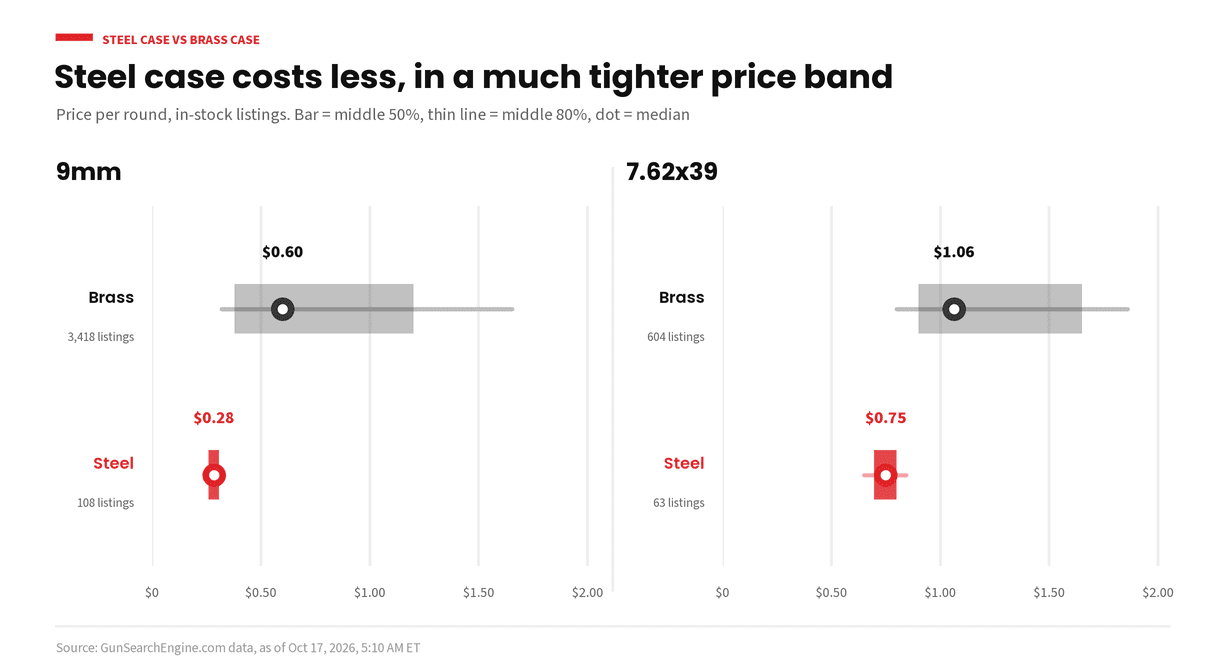
What steel-case ammo is, why it costs less, the common worries about extraction, range rules and reloading, and when brass is the better pick.
- ammo
- steel case
- brass case
- comparisons
October 15, 2026
Mobile shoppers, AI crawlers, and why Gun Search Engine leans in
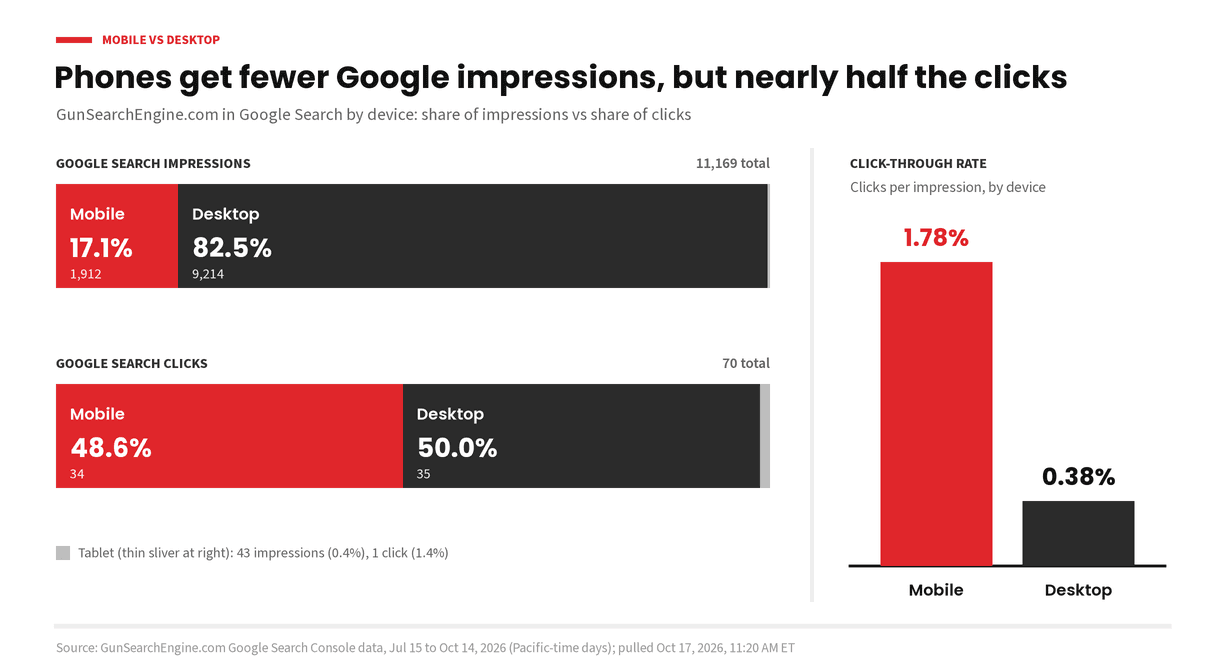
People shop on phones. AI assistants crawl and summarize the aisle. Gun Search Engine is built for both: a mobile-first card UI and AI discovery that is welcome, not blocked.
- mobile
- AI discovery
- shopping hubs