

Blog
10mm Auto Explained: Full-Power, Subsonic and the Pistols That Shoot It
Gun Search Engine·
- ammo
- 10mm
- handguns
- calibers
10mm Auto has a loyal following. Hikers carry it in bear country, hunters use it where it is legal, and plenty of people just like shooting it at the range. This guide covers what the cartridge is, how the different loads compare, and what to look for in a pistol. You can see live 10mm ammo listings any time.
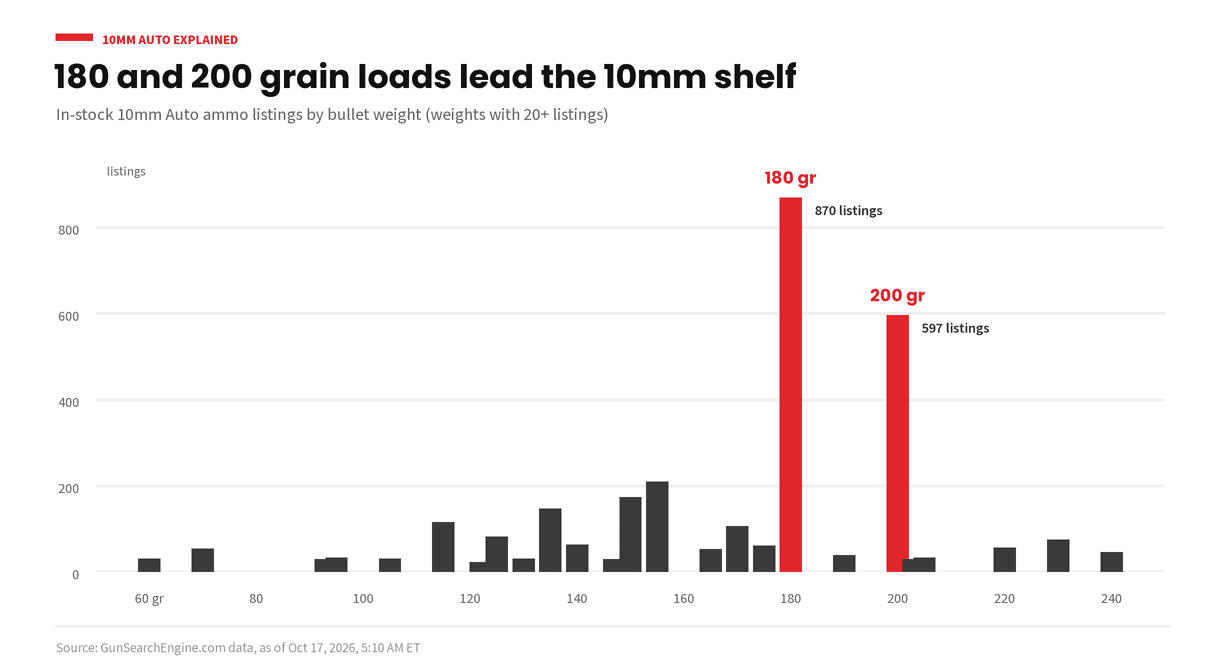
The chart at the top shows which bullet weights fill the most in-stock 10mm listings on Gun Search Engine right now.
What 10mm Auto is
10mm Auto is a semi-auto pistol cartridge built for more power than the common service rounds of its day. Ammo boxes may call it 10mm, 10mm Auto or 10mm Automatic. They are all the same round.
The FBI adopted 10mm for a time, then asked for a softer load that was easier to control. That lighter load led to .40 S&W, which uses the same bullet width in a shorter case. The two are not interchangeable. Only fire the cartridge stamped on your barrel.
“Same bullet width as .40 S&W. A longer case and a lot more room to push.”
Full-power, lighter and subsonic loads
10mm ammo covers a wide range. The same caliber on the box can mean very different recoil and very different uses.
- Full-power loads: the hot end of the range. Makers like Underwood are known for them. People pick these for woods carry and for hunting where a handgun is legal. Expect sharp recoil.
- Lighter loads: often sold as range or practice ammo. They feel closer to .40 S&W and are easier on you and your gun over a long day.
- Defense loads: hollow points built to expand. Hornady and other big makers sell them in both full and milder versions.
- Subsonic loads: usually heavier bullets loaded to stay below the speed of sound. They are quieter through a suppressor, where suppressors are legal.
“Pick the load first. A full-power box and a subsonic box do very different jobs.”
What to look for in a 10mm pistol
Several big makers chamber pistols in 10mm, from polymer striker guns to steel-frame designs and a few revolvers. Browse 10mm handguns to see what is in stock today.
- Size and weight: a full-size or heavier pistol soaks up more recoil. Compact 10mm guns are handy to carry but harder to shoot fast.
- Grip fit: 10mm magazines are long, so the grip is often thick. Hold one before you commit if you can.
- Barrel length: a longer barrel gets more out of full-power loads. A shorter one is easier to carry.
- What you will feed it: if you will shoot mostly light range loads, almost any 10mm will do. For full-power loads, check that the maker rates the gun for them.
- Holsters and mags: popular models have far more holster and magazine choices. That matters for woods carry.
“A heavier, full-size pistol makes the hot loads much easier to shoot well.”
10mm vs .40 S&W at a glance
- 10mm: more power on tap, more recoil, a bigger gun and fewer choices on the shelf.
- .40 S&W: milder, fits smaller guns and is usually easier to find. Compare live .40 S&W listings.
Ready to compare? See live 10mm ammo listings by brand and bullet weight, or check Underwood and Hornady for two very different takes on the round.
Where to shop
Shop the hubs
Browse live stock, or list inventory if you sell.
Related posts
October 18, 2026
How to Buy a Suppressor: A Plain-English Guide to How It Works Now
How getting a suppressor works now that the federal tax is zero and federal registration is not being enforced, what your local dealer still does, and what to ask first. Per ATF guidance as of October 2026.
- suppressors
- nfa
- buying guide
October 18, 2026
Do You Still Need a Form 4 or Tax Stamp for a Suppressor? What Changed in 2026
The federal suppressor tax is zero and ATF is no longer enforcing federal approval and registration for suppressors. Here is what changed, what your dealer still does, and when a Form 4 still matters. Per ATF guidance as of October 2026.
- suppressors
- nfa
- form 4
- tax stamp
October 17, 2026
20 Gauge vs 12 Gauge: Which Shotgun Fits You?
How 20 gauge and 12 gauge shotguns differ in recoil, weight and shell choice, and how to pick the right one for clays, birds or home defense.
- shotguns
- 20 gauge
- 12 gauge
- comparisons
October 17, 2026
.223 Remington vs 5.56 NATO: What's the Difference?
The .223 Remington and 5.56 NATO look the same but are loaded and chambered differently. Here is which rifles can safely shoot which round.
- rifle ammo
- .223 Remington
- 5.56 NATO
- comparisons
October 17, 2026
.357 Magnum vs .38 Special: What's the Difference?
Why a .357 Magnum revolver can shoot .38 Special but not the other way around, how recoil compares, and how to pick loads for the range or for defense.
- handgun ammo
- .357 Magnum
- .38 Special
- revolvers
- comparisons
October 17, 2026
Ammo Cost Per Round: How to Compare Boxes Fairly
Why the box price can fool you, how to figure cost per round, and what else to compare before you pick an ammo listing.
- ammo
- price per round
- how to compare
October 17, 2026
Ammunition Manufacturers: Who Makes What
A plain list of well-known ammunition makers, where they are based and what they are known for, with a link to each brand's live listings.
- ammo
- brands
- manufacturers
October 17, 2026
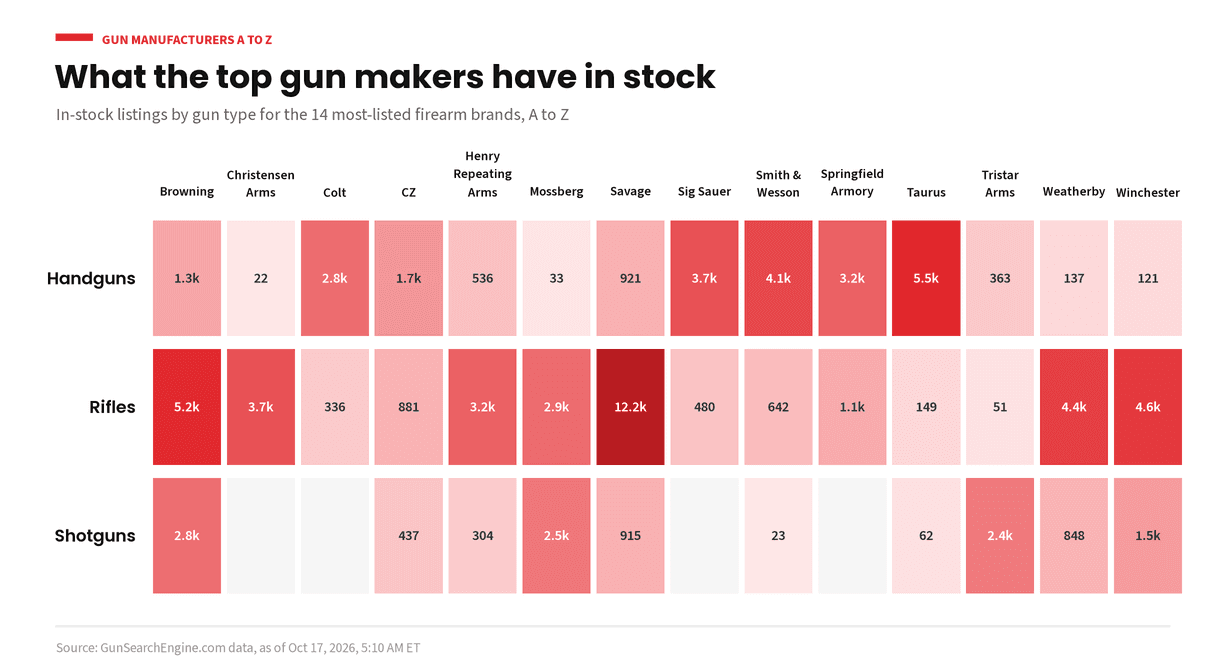
Gun Manufacturers A to Z: Who Makes What
An A to Z list of well-known gun makers, where they are based and what they are known for, plus how to read a model name, with a link to each brand's live listings.
- guns
- brands
- manufacturers
October 17, 2026
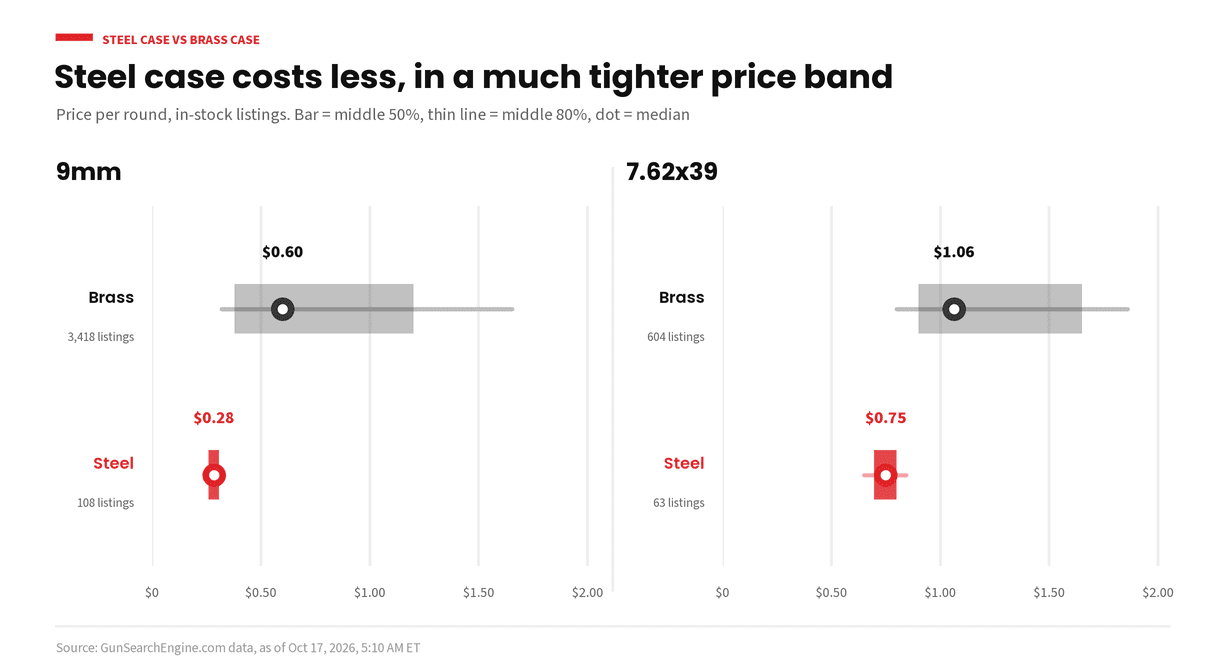
Steel-Case vs Brass-Case Ammo: What to Know
What steel-case ammo is, why it costs less, the common worries about extraction, range rules and reloading, and when brass is the better pick.
- ammo
- steel case
- brass case
- comparisons
October 15, 2026
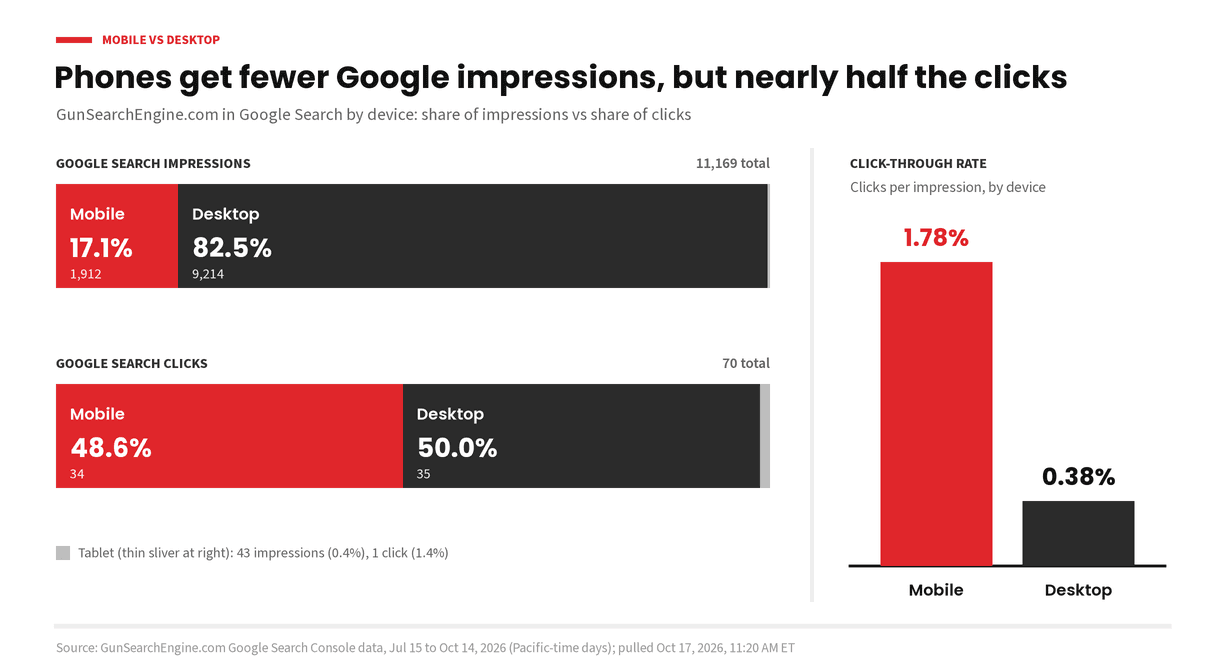
Mobile shoppers, AI crawlers, and why Gun Search Engine leans in
People shop on phones. AI assistants crawl and summarize the aisle. Gun Search Engine is built for both: a mobile-first card UI and AI discovery that is welcome, not blocked.
- mobile
- AI discovery
- shopping hubs