

Blog
Selling Dropship Items Without Confusing Walk-In Customers
Gun Search Engine·
- for dealers
- dropship
The honest way to show dropship items on a gun store site is to say so: put those dropship or catalog products in their own clearly marked area, and make sure a walk-in customer can tell what's on the shelf today. That's how you add a catalog without turning the front door into an argument. If you also want your in-store shelves findable online, list your inventory on GunSearchEngine.
“Mark dropship items so a walk-in can tell what's on the shelf today.”
Two catalogs, one shop
Add dropship items and you're running two catalogs at once, whether the website shows it or not.
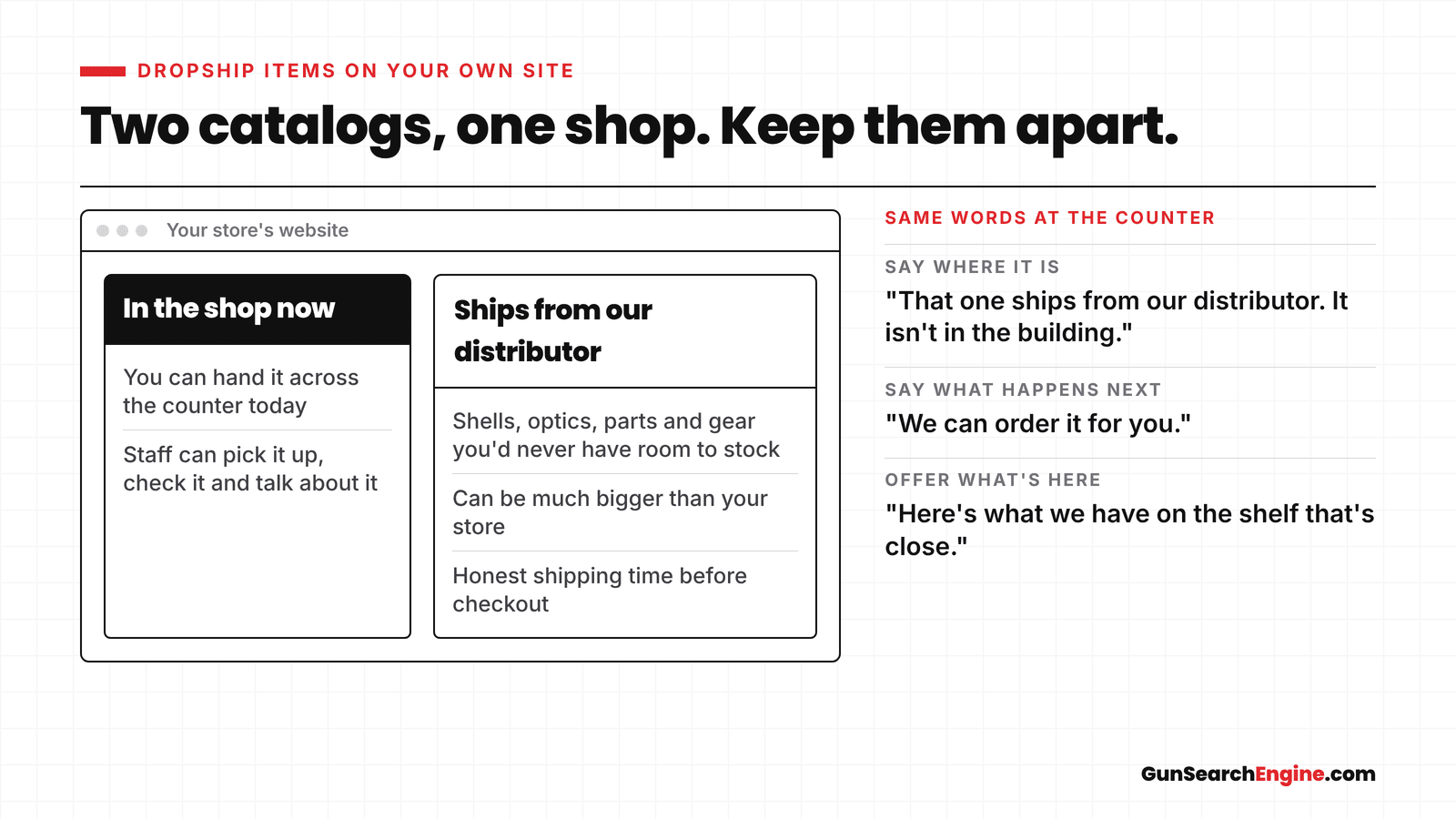
The first is what's in the building: you can hand it across the counter today, and your staff can pick it up, check it and talk about it.
The second is what a distributor can ship. It can be much bigger than your store, and it lets you sell shells, optics, parts and gear you'd never have room to stock.
Both are useful, but they aren't the same promise. When a shopper sees a product on your site, they don't know which catalog it came from unless you tell them, and it's easy to assume that if a local shop's website shows it, the shop has it.
A bigger catalog online is good for sales, and it's bad for trust the day someone drives an hour for a product that only lives in a distributor's system.
“Your website catalog can be bigger than the room, as long as the labels say which items are in it.”
How to show dropship items on a gun store site
The fix is merchandising, not technology, and it comes down to six rules.
- Give dropship items their own area. Use a separate menu, section or category on your site. Don't scatter catalog items through your in-store pages.
- Label every one. Put a clear line on the product page, in words a shopper understands. "Ships from our distributor." "Not in the shop. Ships to you." Use your own wording, but say it plainly and say it the same way every time.
- Keep "in the shop now" clean. If your site has an in-store or "on the shelf" section, nothing from the dropship catalog goes there. Ever.
- Make shipping time honest. If a catalog item takes longer to reach a buyer, the product page should say so before checkout.
- Train the counter. Your staff should use the same words as the site. If a customer asks about a catalog item, the answer at the counter should match the label on the page.
- Check it from a phone. Make sure the label shows up on a phone, not just on a desktop.
“An unmarked catalog item gets treated as shelf stock.”
What to say at the counter
Your staff will get the question, "I saw it on your website. Where is it?", so give them a short script and the answer comes out the same every time.
- Say where it is. "That one ships from our distributor. It isn't in the building."
- Say what happens next. "We can order it for you, and here's how it gets to you."
- Offer what's here. "If you want something today, here's what we have on the shelf that's close."
- Fix the page if it misled them. If the customer says the site made it look like it was in stock, take a note and check the label that day.
That last step matters most, because a customer who got confused by the website just showed you which label to fix.
How one shop does it
Target Shotguns is a shotgun specialist that sells in-store competition and field shotguns, used and new, plus shotgun parts, choke tubes, fitted stocks and clay target gear. Many of its in-store shotguns are used, so each one is its own listing.
Its WooCommerce store, targetshotguns.com, also connects distributor catalogs, so the site sells shells, optics, magazines and other gear beyond what's in the building. The case study says the menu "keeps those drop ship items in their own clearly marked area, so nobody drives in expecting one on the shelf." The in-store shotguns stay up front, and shoppers can browse in-store guns, parts and accessories, or go straight to the drop ship menu.
The register is MicroBiz POS, the register the shop already ran, and it stayed; the store is connected to it, so the counter and the website work from the same system.
You can read how Target Shotguns keeps its drop ship catalog marked apart, so a walk-in customer isn't sent after something that lives only in the catalog.
Target Shotguns is also a participating seller on GunSearchEngine.
The takeaway is that in-store stock gets the front of the store, online and off, while the catalog gets its own door, and a shopper always knows which door they walked through.
How dropship items show up on GunSearchEngine
GunSearchEngine lists what's in your feed. It has no separate dropship setting, so a distributor item in your feed shows up like any other listing, with the price and quantity your feed reports. Items that hide their price behind add to cart don't appear in search. Distributor-fulfilled and dropship items belong in your feed like the rest of your catalog, as long as each one's product page says it ships from the distributor.
GunSearchEngine reads the feed you give it, which is the feed you already send AmmoSeek, Gun.deals or GunMade, or your own XML or JSON feed, and every click goes to your product page.
If a product page says "ships from our distributor," the shopper who clicks through from GunSearchEngine will see that label too, which is one more reason to get the labels right first.
Start on the List Your Inventory page when you're ready.
A short honesty checklist
Run through this before you turn on a new catalog, and again after any site change.
- Can a first-time visitor tell, in one look, what's in the building?
- Would someone at your counter give the same answer as the product page?
- Does every catalog item carry the same clear label?
- Is your "in the shop now" area free of catalog items?
- Does the phone view show the label?
- If a listing can't be marked cleanly, have you kept it out of anything that says "in stock in the shop"?
If any answer is no, fix that before you add more products.
Quick answers
How do I show dropship items on a gun store website without confusing walk-in customers? Put those items in their own clearly marked area, label them as not in the building, and keep in-store stock in a separate browse path, so a walk-in customer can tell the difference at a glance.
Why does the label matter? Because the website catalog can be bigger than the room, and if a product isn't marked, people treat it as shelf stock and drive in expecting to see it.
Does this change how I list inventory on GunSearchEngine? GunSearchEngine has no separate dropship setting, so a distributor item in your feed shows up like any other listing, with the price and quantity your feed reports, and items that hide their price behind add to cart don't appear in search. Dropship items belong in your feed, as long as each one's product page says it ships from the distributor.
Sources
Shop the hubs
Browse live stock, or list inventory if you sell.
Related posts
November 13, 2026
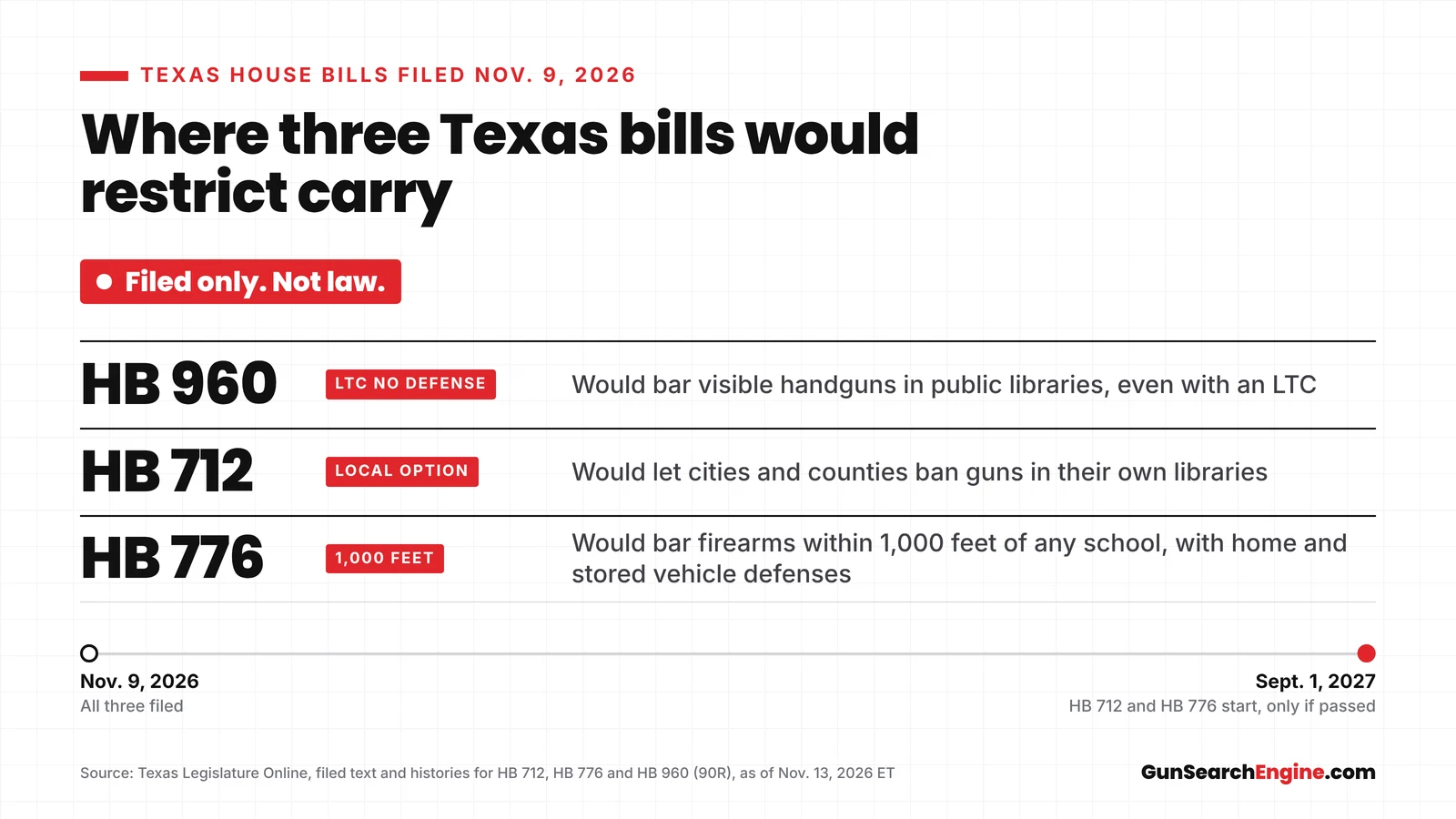
How Texas's new carry bills would restrict where you can carry: HB 712, HB 776 and HB 960
Three Texas House bills filed Nov. 9 would restrict carry in libraries and within 1,000 feet of schools. None is law yet; each is filed only.
- news
- Texas
November 12, 2026
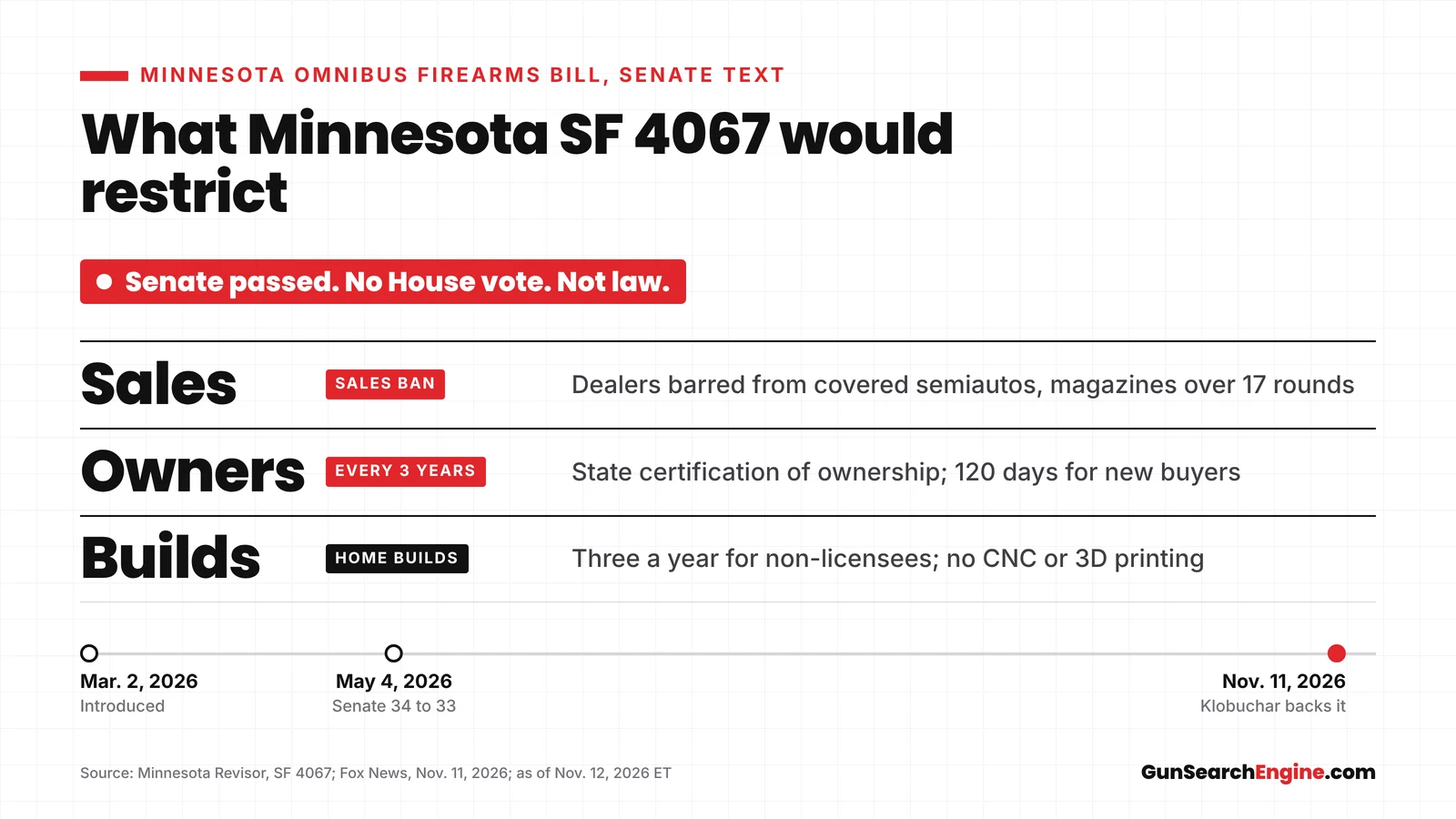
Klobuchar backs SF 4067: how Minnesota's gun bill would restrict buyers and owners
SF 4067 isn't law: Minnesota's Senate passed it 34-33 in May, with no House vote. What it would bar dealers from selling and require of current owners.
- news
- Minnesota
November 11, 2026
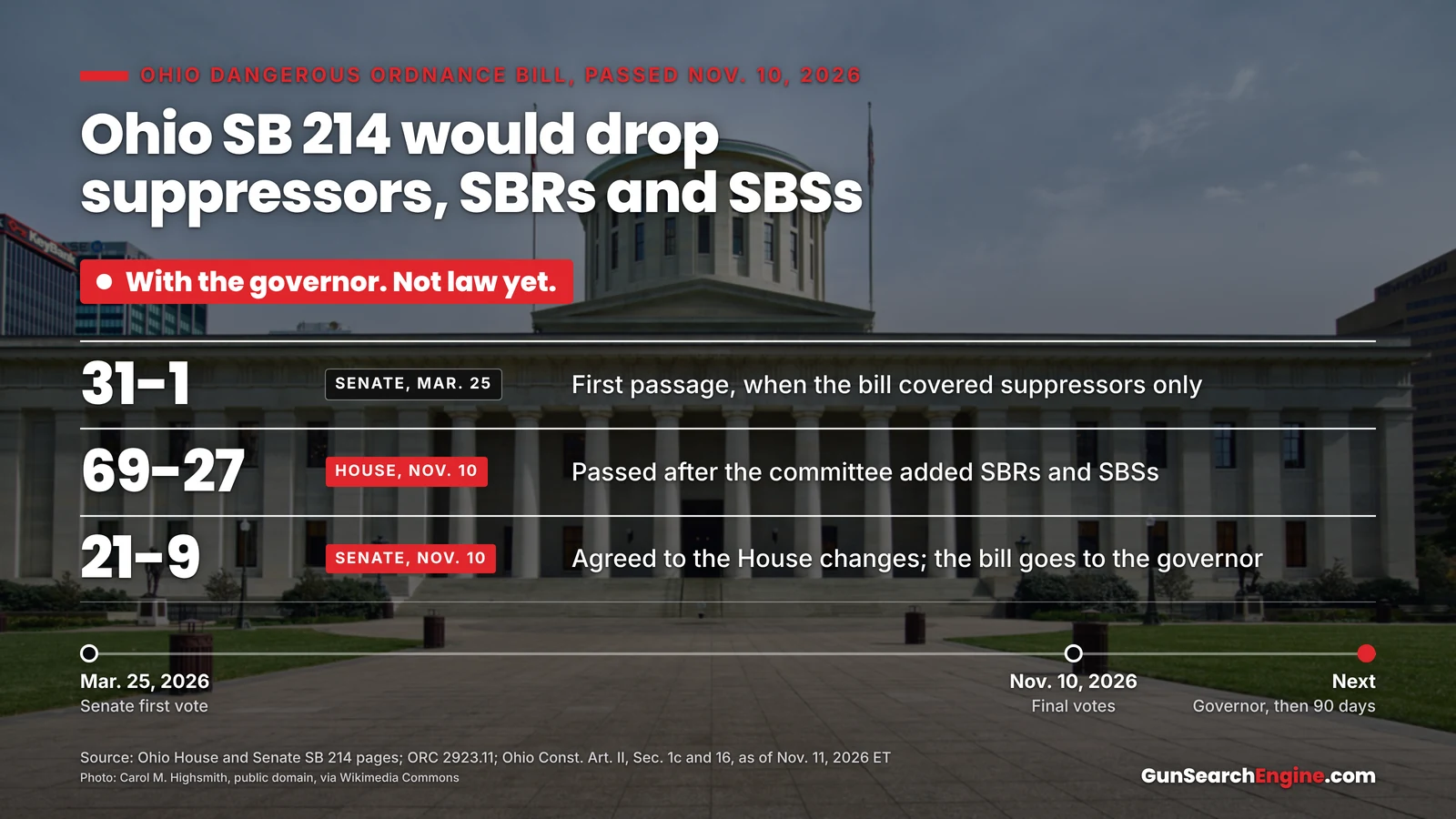
Ohio SB 214 goes to DeWine: what it changes for suppressors, SBRs and SBSs
Ohio SB 214 passed both chambers Nov. 10 and now awaits Gov. DeWine. It would take suppressors, SBRs and SBSs out of the state's dangerous-ordnance law.
- news
- Ohio
November 10, 2026
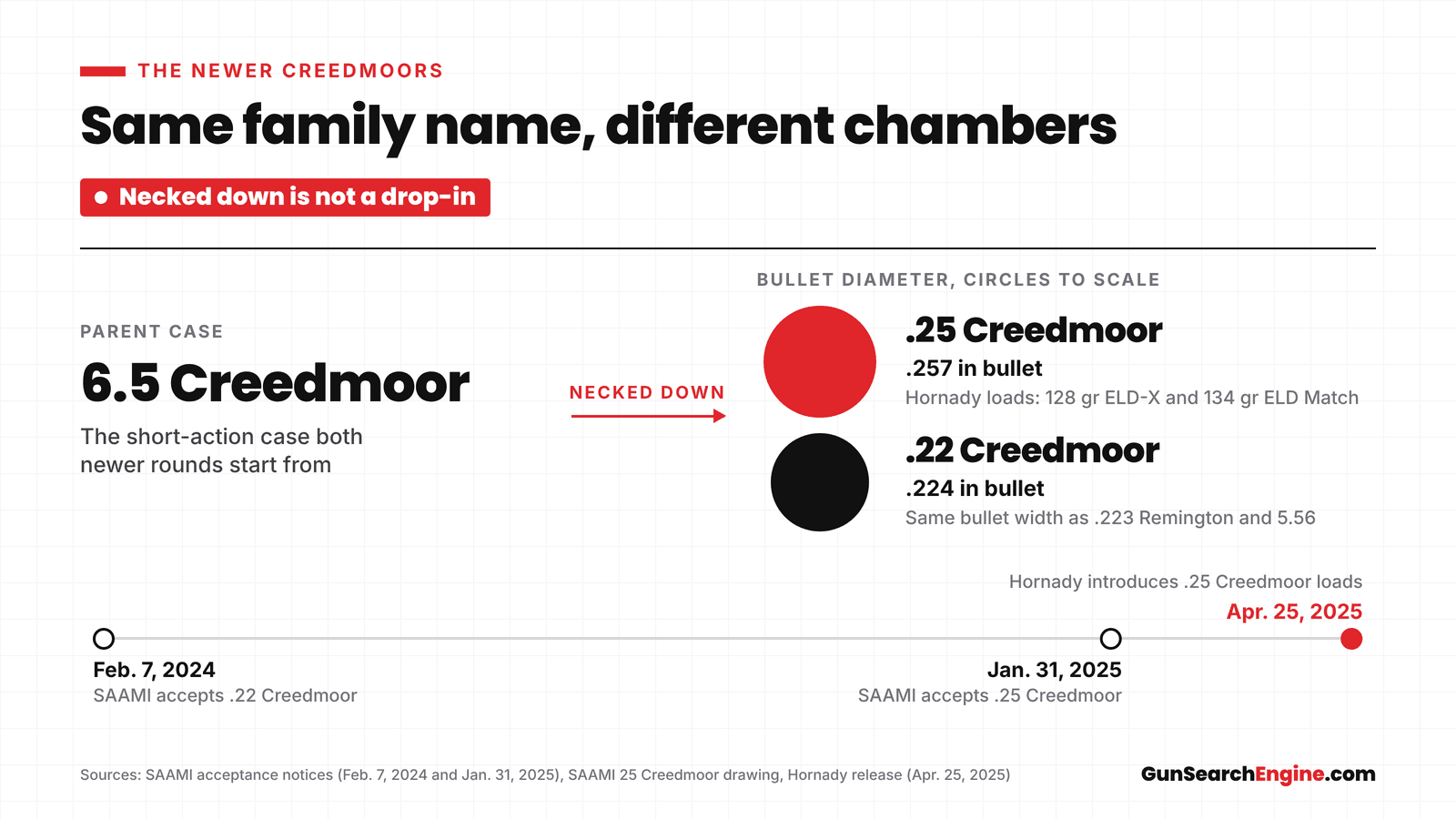
.25 Creedmoor and .22 Creedmoor Explained: The Newer Creedmoors
.25 and .22 Creedmoor start from the 6.5 Creedmoor case, necked down. What changed, why you can't swap them, and how to pick the right one.
- rifle ammo
- Creedmoor
- explainers
November 10, 2026
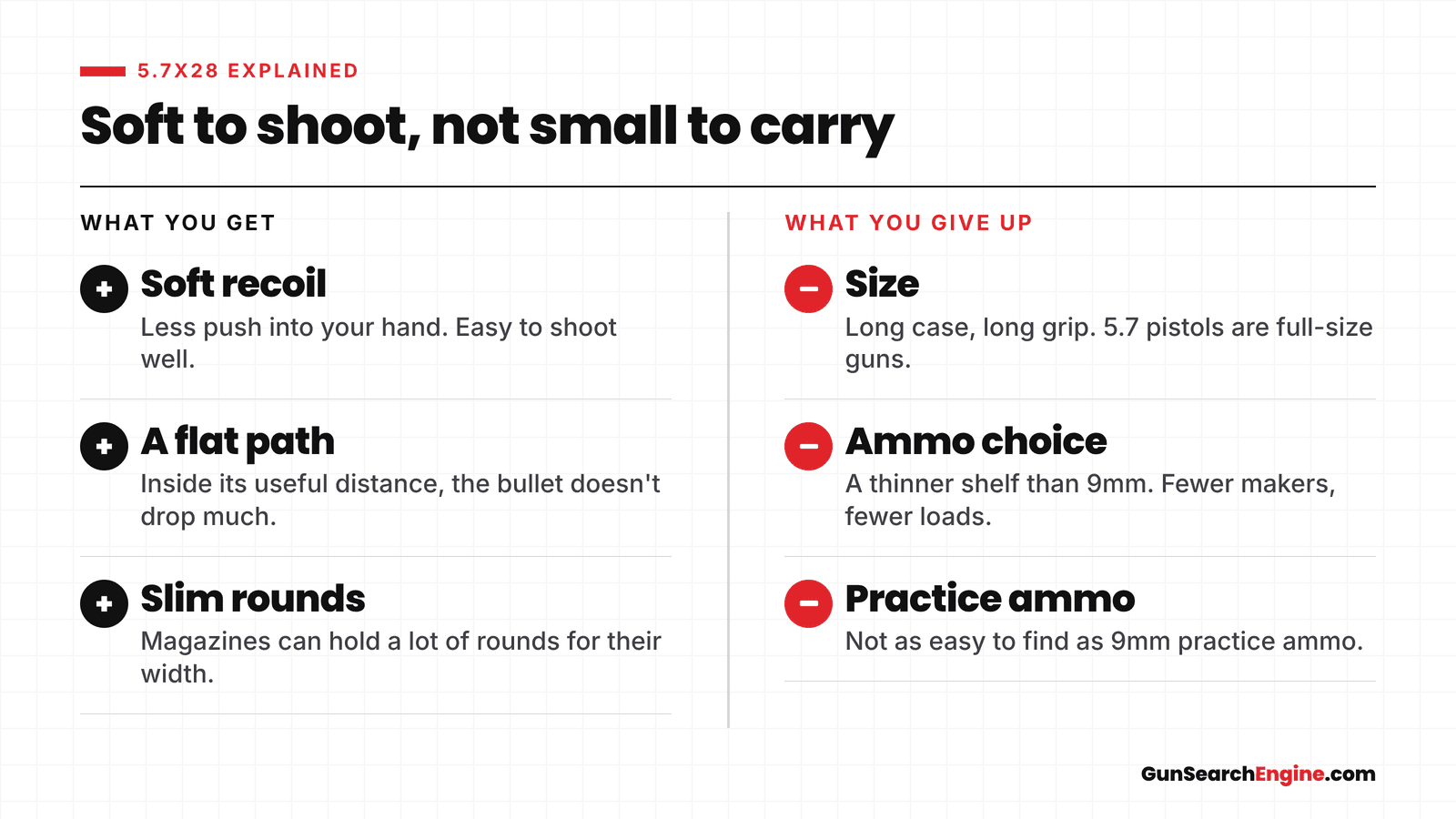
5.7x28 Explained: The Round, the Guns, the Tradeoffs
What 5.7x28 is, which pistols and carbines shoot it, and what you trade versus 9mm: soft recoil and a flat path for a long case and fewer loads.
- handgun ammo
- 5.7x28
- explainers
November 10, 2026
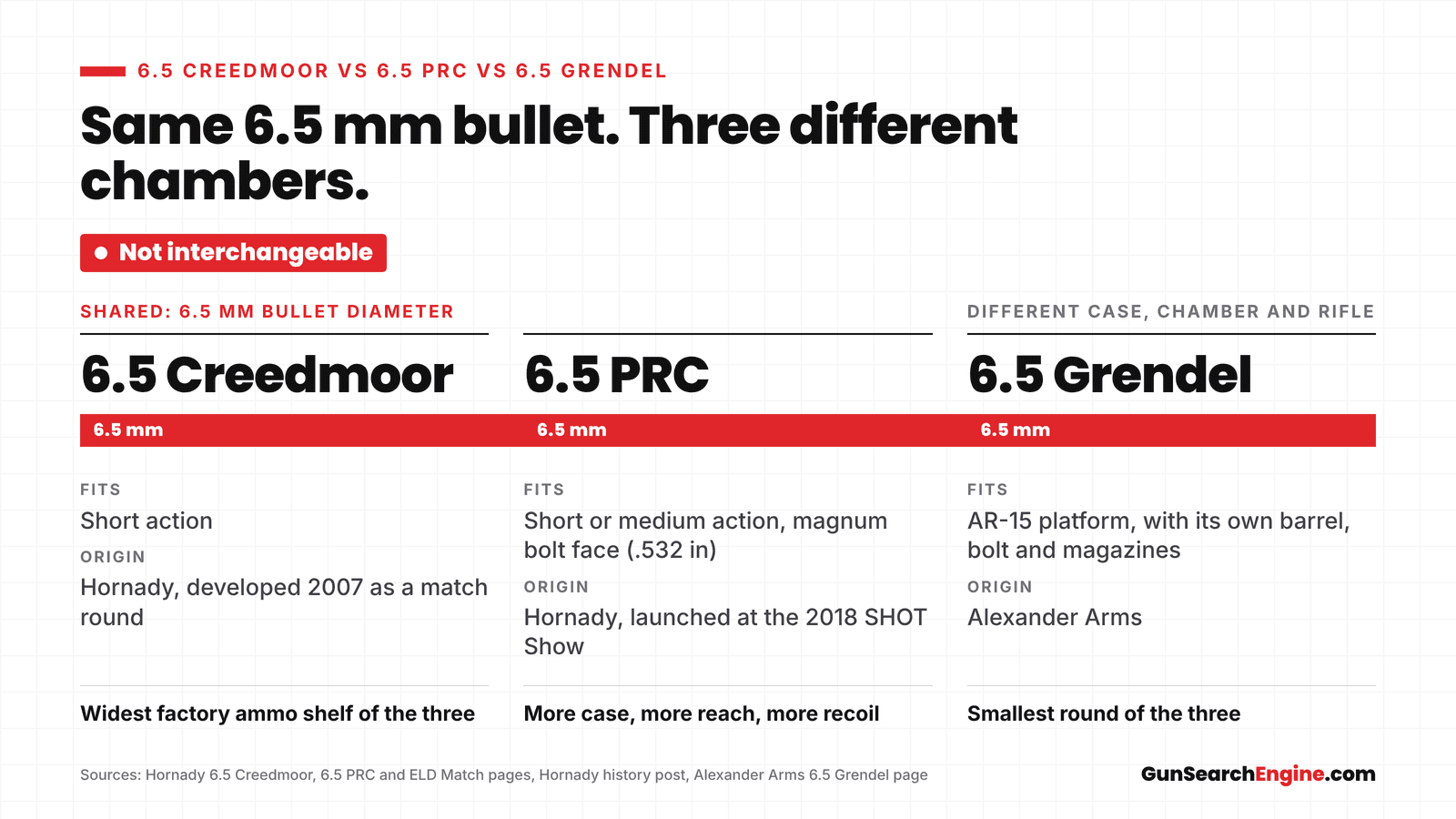
6.5 Creedmoor vs 6.5 PRC vs 6.5 Grendel: What's the Difference?
Compare 6.5 Creedmoor, 6.5 PRC and 6.5 Grendel by case, recoil, ammo shelf and the rifles chambered in each, and see which one to buy for deer.
- rifle ammo
- 6.5 Creedmoor
- explainers
November 10, 2026
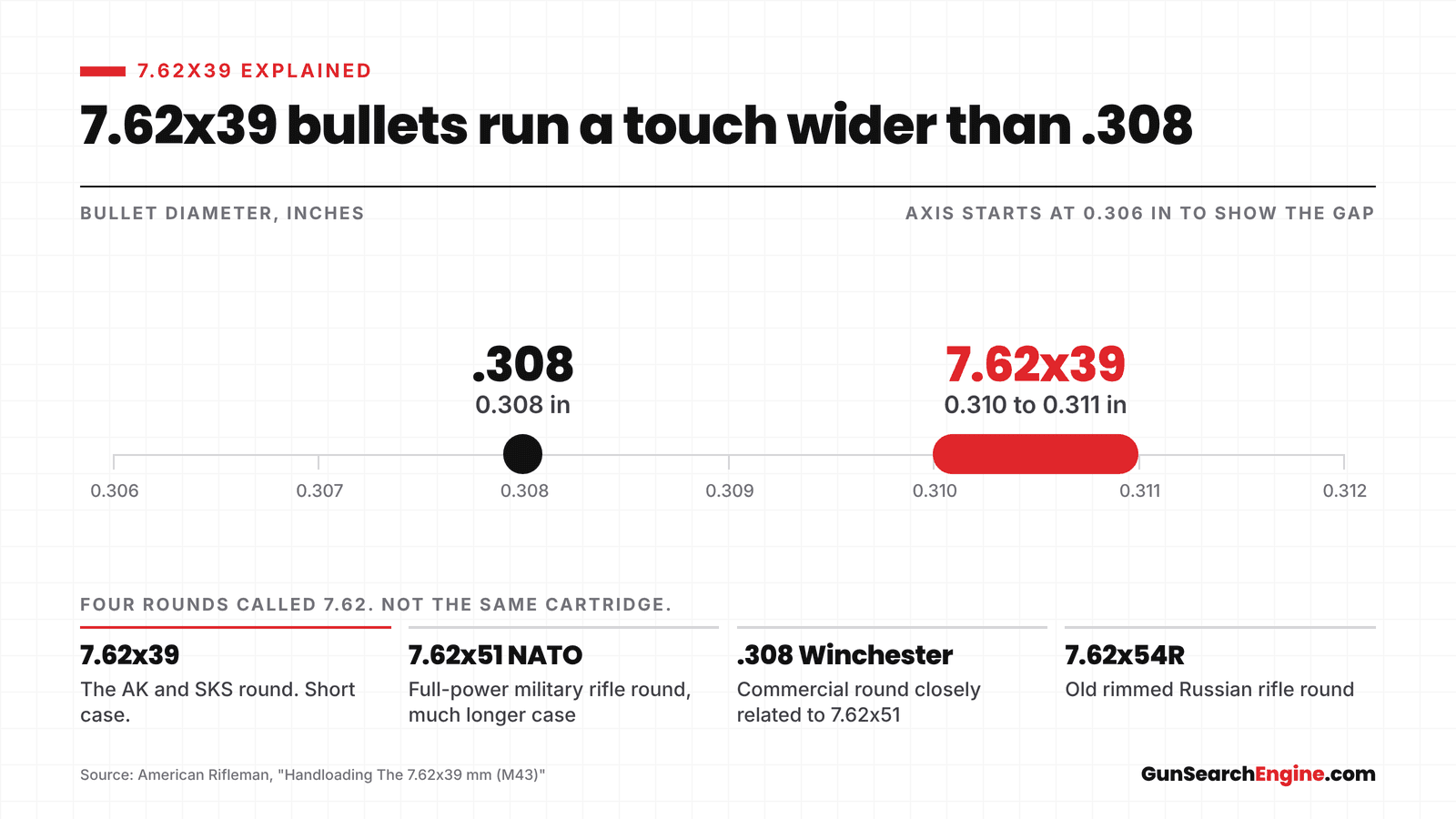
7.62x39 Explained: FMJ, Hunting Loads and What Shoots It
What 7.62x39 is, why FMJ and hunting loads do different jobs, which rifles shoot it, and why it isn't the same round as 7.62x51 or .308.
- rifle ammo
- 7.62x39
- explainers
November 10, 2026
9mm Carbines (PCCs) Explained: Why a Rifle in a Pistol Caliber
A pistol caliber carbine is a shouldered gun that shoots pistol ammo, usually 9mm. Why that's useful, what you give up, and where to look next.
- guns
- 9mm
- explainers
November 10, 2026
How to Claim Your Gun Store Listing on GunSearchEngine
Claim your gun store on GunSearchEngine with the public ATF license list, add the feed you already use, and send shopper clicks to your own product pages.
- for dealers
- seller pages
November 10, 2026
What FFL Analytics Shows a Dealer About What Shoppers Want
FFL Analytics shows the calibers and products shoppers type on your gun store site, including ones you don't carry. What it shows and how to use it.
- for dealers
- FFL Analytics
November 10, 2026
Keep Your Listings Honest: Inventory Feeds and Stale Stock
Why gun store listings go stale, how a product feed is supposed to work, and what to do when the register and the website don't agree.
- for dealers
- inventory feeds
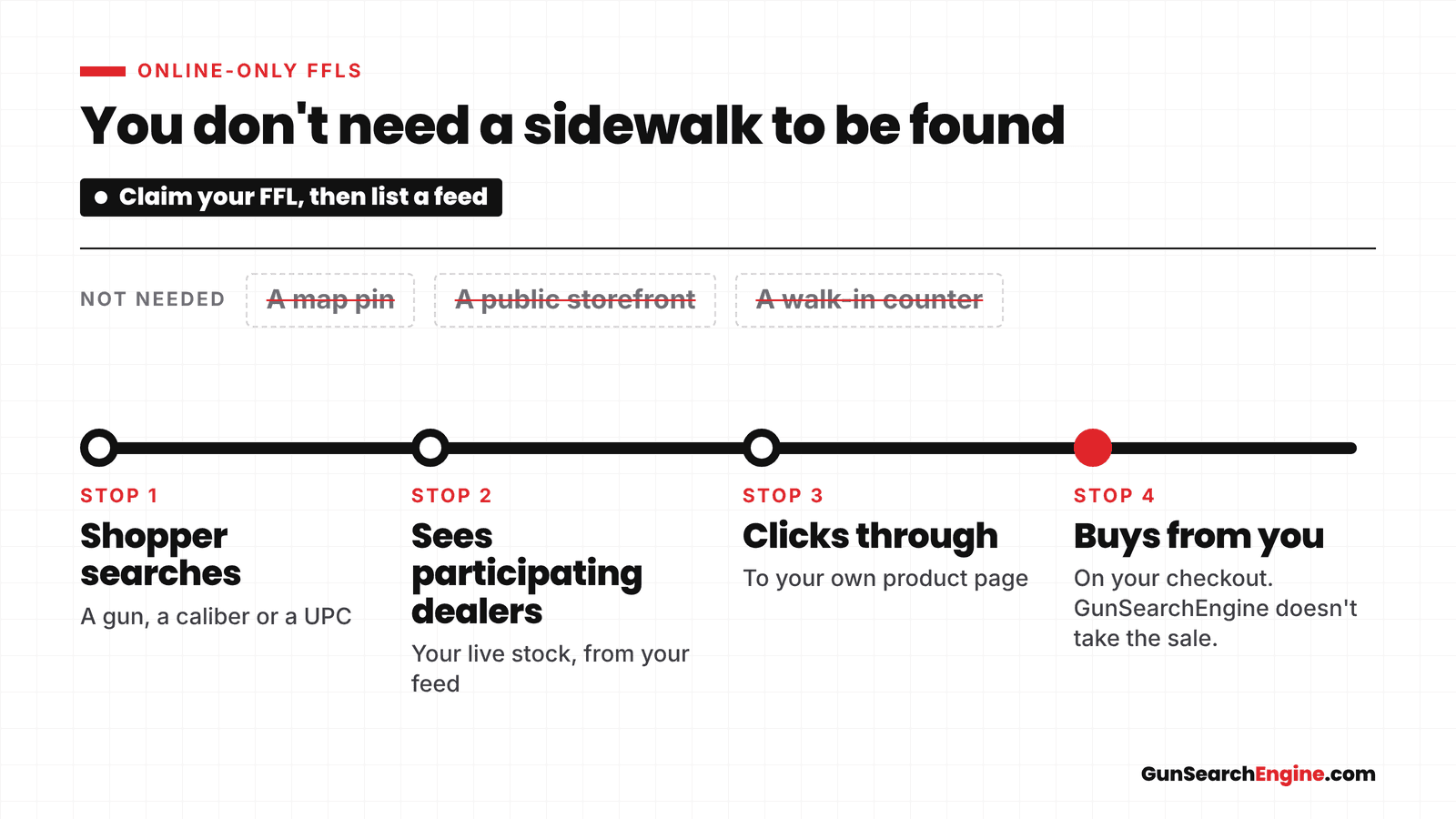
November 10, 2026
Online-Only FFL? How to Get Listed and Found Without a Storefront
How an online-only FFL can claim a GunSearchEngine listing, publish an inventory feed, and get found without a walk-in storefront.
- for dealers
- online-only FFLs
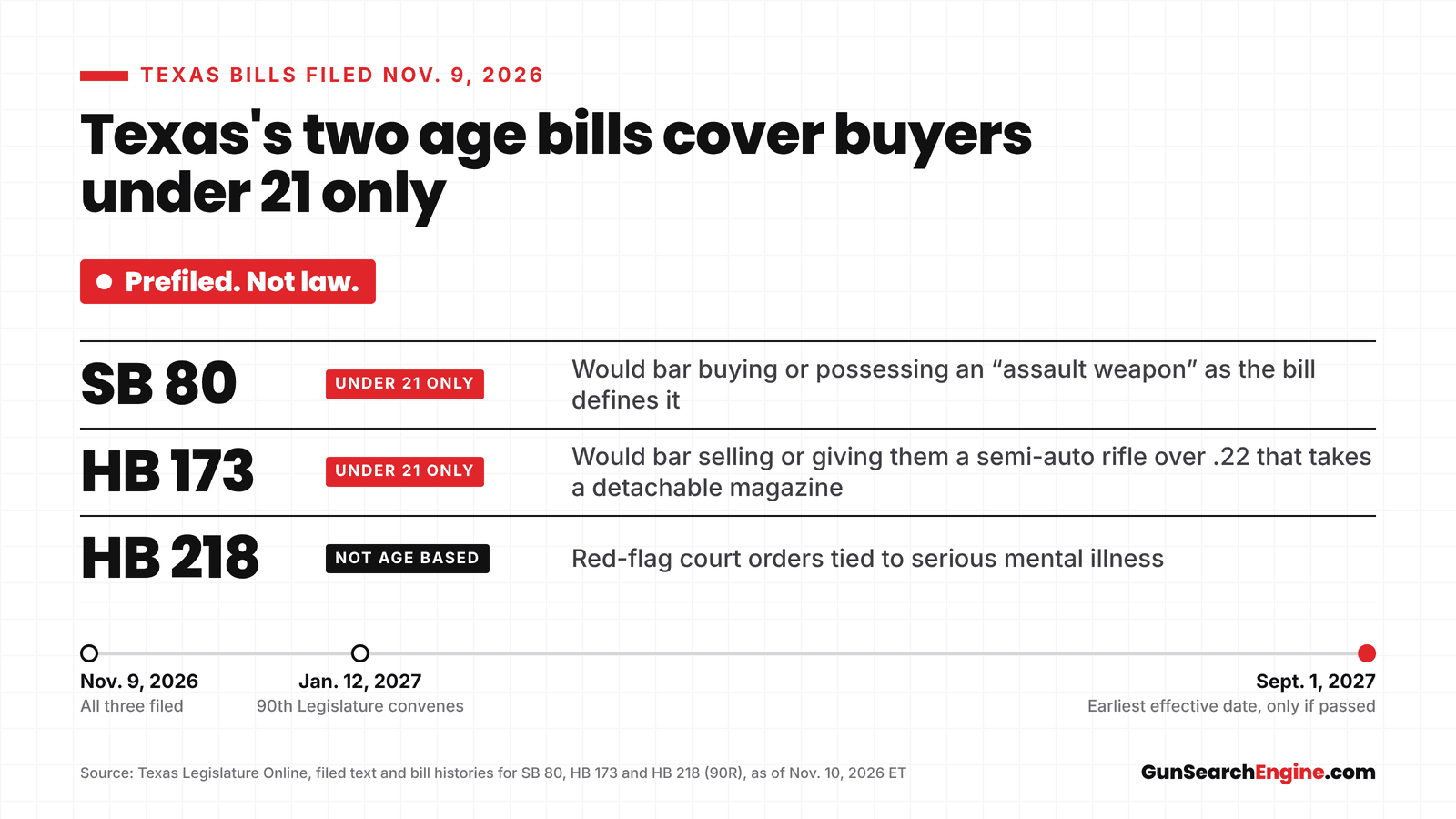
November 10, 2026
How Texas's new gun bills would restrict buyers: SB 80, HB 173 and HB 218
SB 80, HB 173 and HB 218 are prefiled Texas bills, not law. The age bills deal only with under-21 buyers and sales to them. What the filed text says.
- news
- Texas
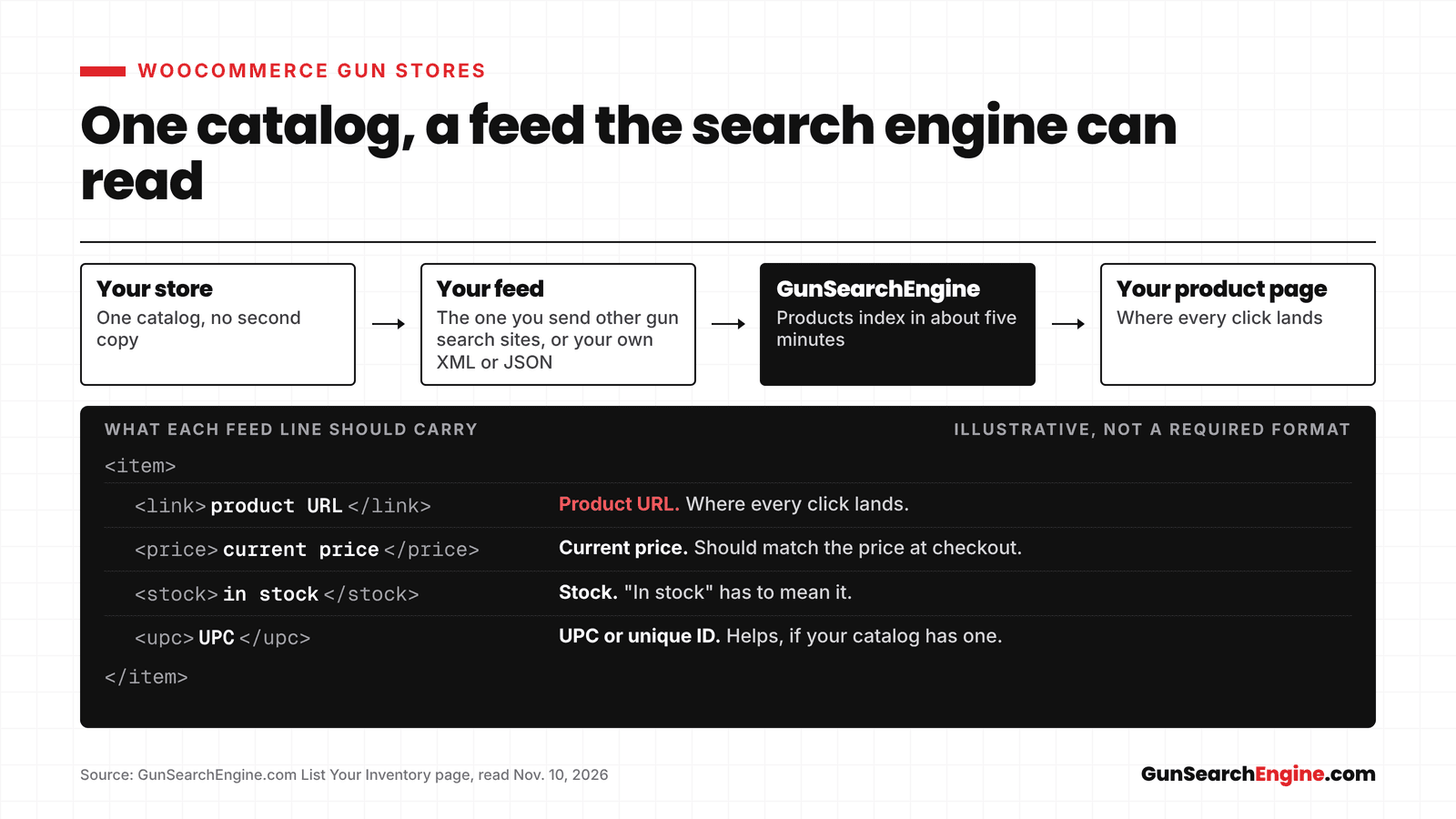
November 10, 2026
WooCommerce Gun Stores on GunSearchEngine: Getting Your Catalog Listed
How a WooCommerce gun store gets its catalog on GunSearchEngine, using a feed you may already send to other search sites, or your own XML or JSON.
- for dealers
- WooCommerce
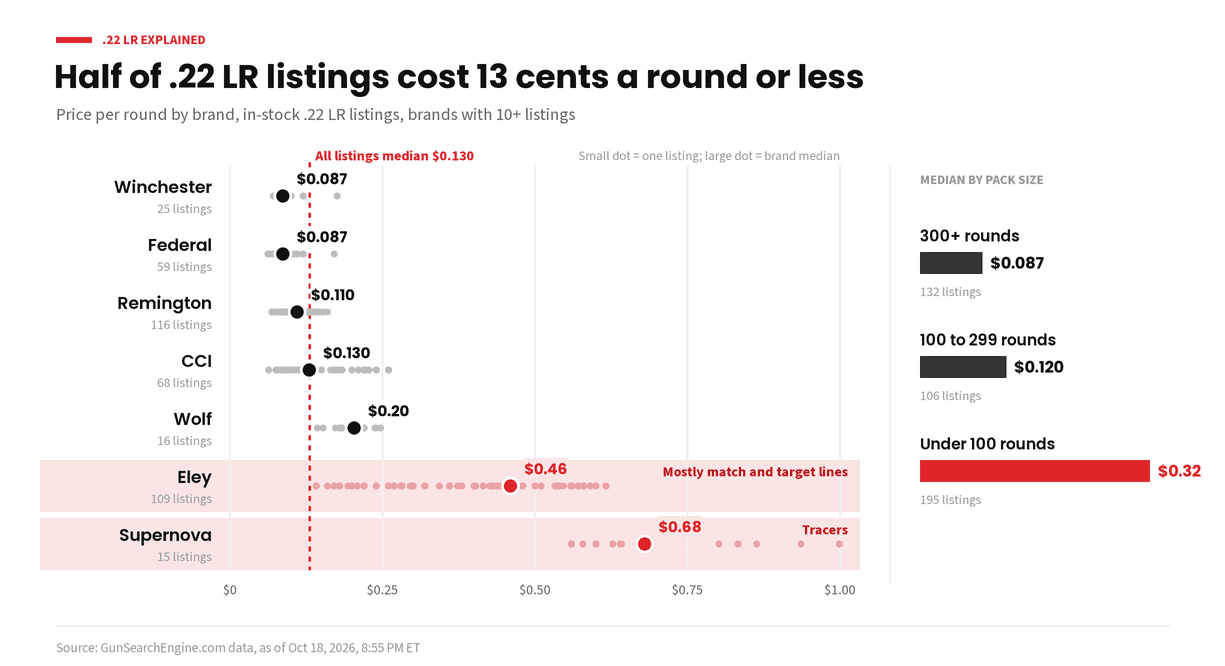
October 29, 2026
.22 LR Explained: What It's Good For and How to Choose Loads
The .22 LR is one of the most common rounds to learn on. Here is what it is, what it is good for, and how subsonic, standard and high velocity loads differ.
- rimfire
- .22 LR
- explainers
October 29, 2026
300 Blackout Explained: Supersonic, Subsonic and What Shoots It
The 300 Blackout puts a .30 caliber bullet in a rifle built around 5.56 parts. Here is how supersonic and subsonic loads differ, what shoots it, and the safety rule every owner needs.
- rifle ammo
- 300 Blackout
- explainers
October 29, 2026
.32 ACP Explained: The Small Pistol Round That's Still Around
The .32 ACP is an old pocket pistol round that never quite went away. Here is what it is, what shoots it, and who it still makes sense for.
- handgun ammo
- .32 ACP
- explainers
October 29, 2026
.380 ACP vs 9mm for Everyday Carry: What's the Difference?
The .380 ACP and the 9mm use bullets of about the same width, but they are not the same round. Here is how they compare for everyday carry, from recoil to pistol size.
- handgun ammo
- .380 ACP
- 9mm
- concealed carry
- comparisons
October 29, 2026
.40 S&W vs 9mm: What's the Difference?
The .40 S&W and the 9mm are two of the most common pistol rounds. Here is how they differ in size, recoil and capacity, and why so many shooters have moved to 9mm.
- handgun ammo
- .40 S&W
- 9mm
- comparisons
October 29, 2026
.45 ACP vs 9mm: What's the Difference?
Big and slow vs small and fast. Here is how the .45 ACP and the 9mm compare on bullet size, recoil, capacity and practice, and who each one suits.
- handgun ammo
- .45 ACP
- 9mm
- comparisons
October 29, 2026
.50 AE Explained: The Biggest Common Pistol Round
The .50 Action Express is the round behind the big Desert Eagle pistol. Here is what it is, what shoots it, and what to expect if you want to try one.
- handgun ammo
- .50 AE
- explainers
October 29, 2026
What FBI Background Check Numbers Do and Don't Tell You
Monthly FBI background check counts get quoted as gun sales. They are not. Here is what the numbers count, what they leave out, and how to read them.
- data
- background checks
- explainers
October 29, 2026
FMJ vs Hollow Point: What's the Difference?
Full metal jacket and hollow point bullets are built for different jobs. Here is how each one works, when to use which, and why many shooters practice with one and carry the other.
- handgun ammo
- 9mm
- bullet types
- comparisons
October 29, 2026
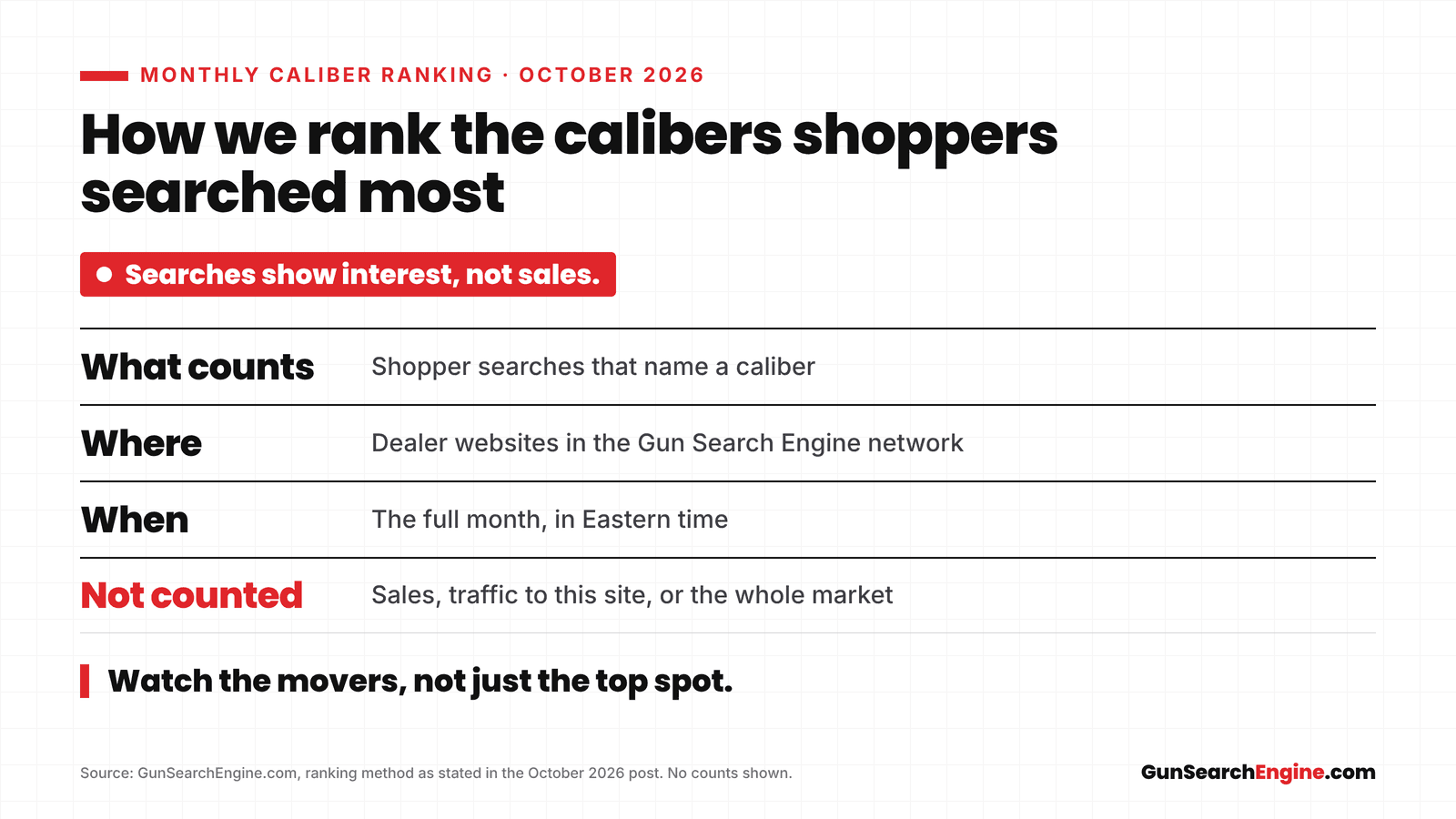
What Calibers Shoppers Searched Most in October 2026
A monthly ranking of the calibers shoppers searched for most on participating dealer sites. What the ranking measures, what it does not, and how to use it.
- data
- calibers
- monthly ranking
October 29, 2026
Rimfire vs Centerfire Suppressors: What's the Difference?
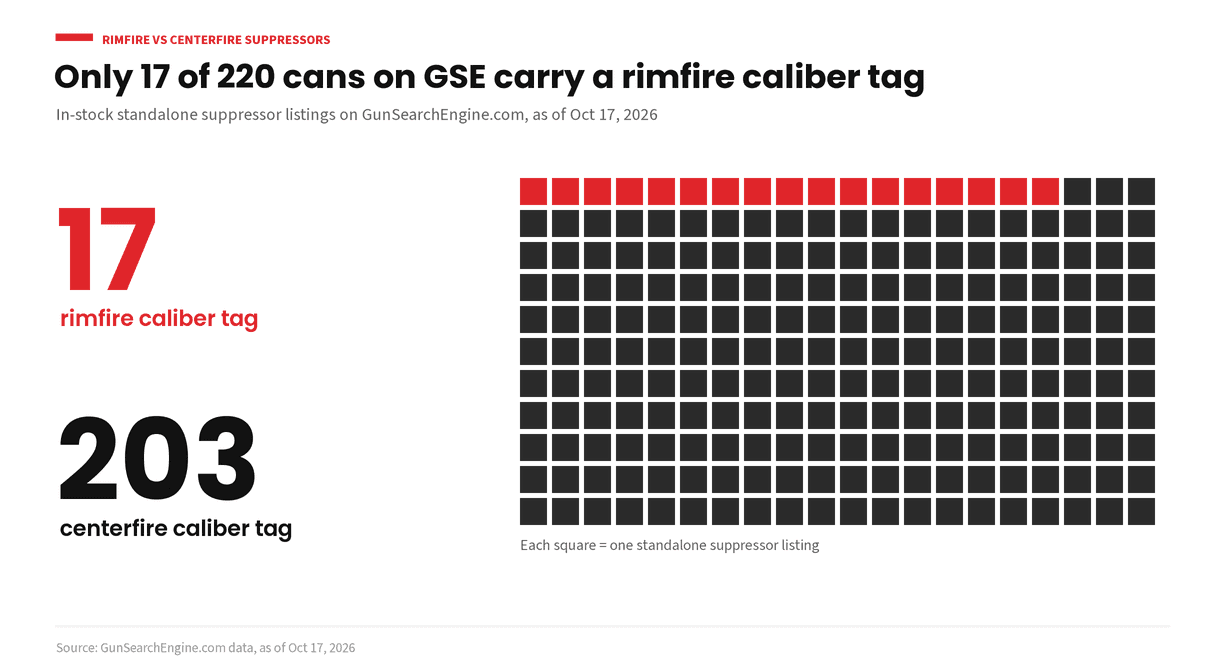
Why rimfire and centerfire suppressors are built differently, why a .22 LR can is a common first can, when a centerfire can makes more sense, and what to ask your dealer. Per ATF guidance as of October 2026.
- suppressors
- nfa
- rimfire
- .22 LR
October 29, 2026
Shotgun Shells Explained: Birdshot, Buckshot and Slugs
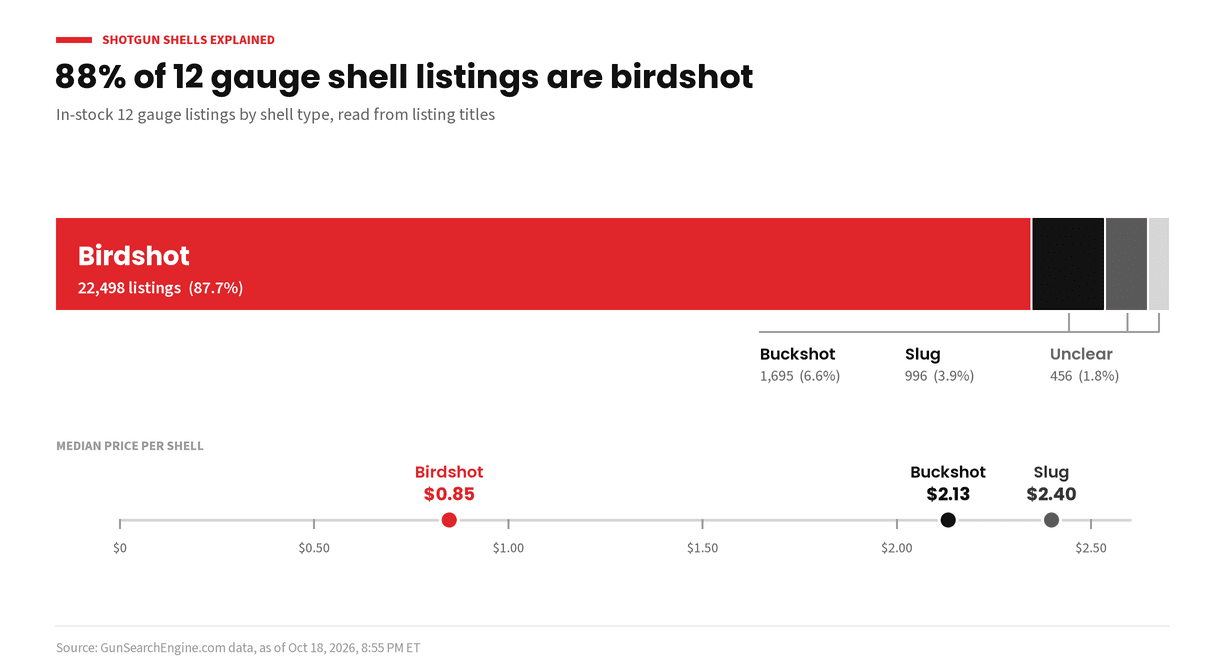
Birdshot, buckshot and slugs do very different jobs. Here is what each shotgun shell is for, how shot sizes work, and what to check on your barrel before you buy.
- shotgun ammo
- 12 gauge
- explainers
October 29, 2026
Solvent Traps vs Suppressors: What's the Difference?
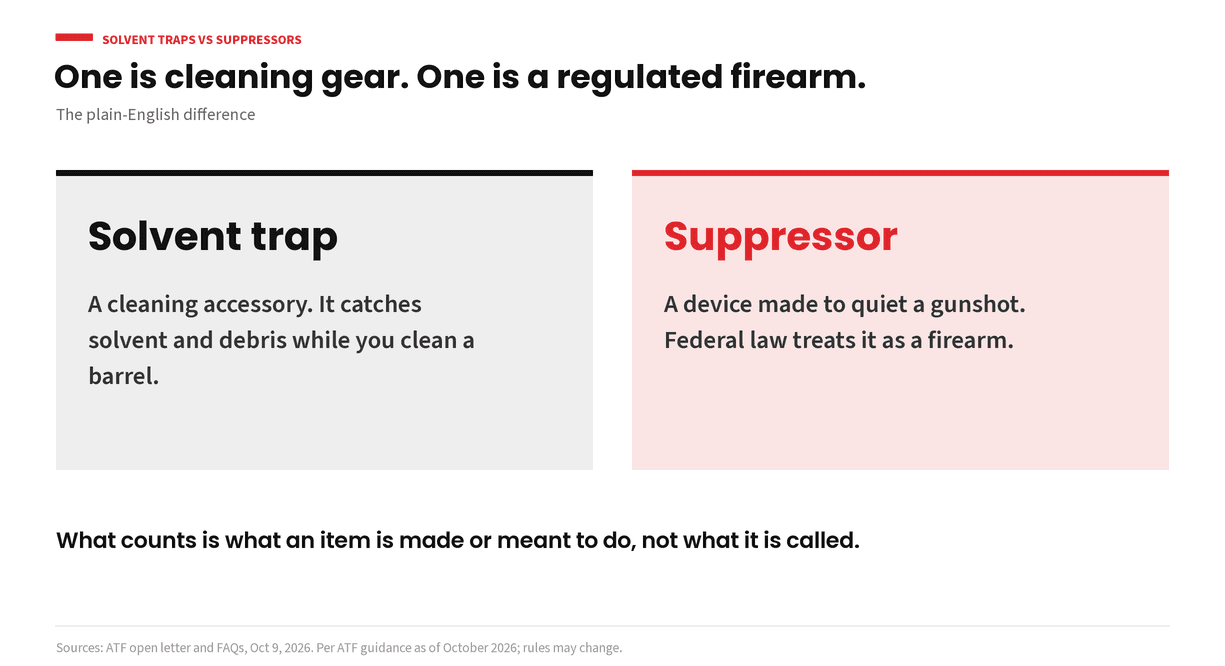
A solvent trap is cleaning gear. A suppressor is a device made to quiet a gunshot, and the law treats it as a firearm. Here is the plain-English difference, and what the recent federal changes do and don't change. Per ATF guidance as of October 2026.
- suppressors
- nfa
- solvent traps
October 28, 2026
How to Choose a Suppressor by Caliber: A Plain-English Guide
How caliber decides which suppressor fits: the rated-caliber rule, pistol, rifle and multi-caliber cans, why slower ammo is quieter, and what to ask your dealer. Per ATF guidance as of October 2026.
- suppressors
- nfa
- calibers
October 27, 2026
Deer Rifle Calibers Compared: .270, .30-06, .308 and 6.5 Creedmoor
Four classic deer rounds side by side: the .270 Winchester, .30-06 Springfield, .308 Winchester and 6.5 Creedmoor. What each does well and how to pick one for the way you hunt.
- hunting
- rifle ammo
- .308 Winchester
- 6.5 Creedmoor
- comparisons
October 20, 2026
.308 Winchester vs 7.62x51 NATO: What's the Difference?
The .308 Winchester and 7.62x51 NATO share the same outside size, but they come from different specs. Here is what actually differs and how to tell what your rifle should shoot.
- rifle ammo
- .308 Winchester
- 7.62x51 NATO
- comparisons
October 18, 2026
How to Buy a Suppressor: A Plain-English Guide to How It Works Now
How getting a suppressor works now that the federal tax is zero and federal registration is not being enforced, what your local dealer still does, and what to ask first. Per ATF guidance as of October 2026.
- suppressors
- nfa
- buying guide
October 18, 2026
Do You Still Need a Form 4 or Tax Stamp for a Suppressor? What Changed in 2026
The federal suppressor tax is zero and ATF is no longer enforcing federal approval and registration for suppressors. Here is what changed, what your dealer still does, and when a Form 4 still matters. Per ATF guidance as of October 2026.
- suppressors
- nfa
- form 4
- tax stamp
October 17, 2026
10mm Auto Explained: Full-Power, Subsonic and the Pistols That Shoot It
What the 10mm Auto cartridge is, how it relates to .40 S&W, the difference between full-power, lighter and subsonic loads, and what to look for in a 10mm pistol.
- ammo
- 10mm
- handguns
- calibers
October 17, 2026
20 Gauge vs 12 Gauge: Which Shotgun Fits You?
How 20 gauge and 12 gauge shotguns differ in recoil, weight and shell choice, and how to pick the right one for clays, birds or home defense.
- shotguns
- 20 gauge
- 12 gauge
- comparisons
October 17, 2026
.223 Remington vs 5.56 NATO: What's the Difference?
The .223 Remington and 5.56 NATO look the same but are loaded and chambered differently. Here is which rifles can safely shoot which round.
- rifle ammo
- .223 Remington
- 5.56 NATO
- comparisons
October 17, 2026
.357 Magnum vs .38 Special: What's the Difference?
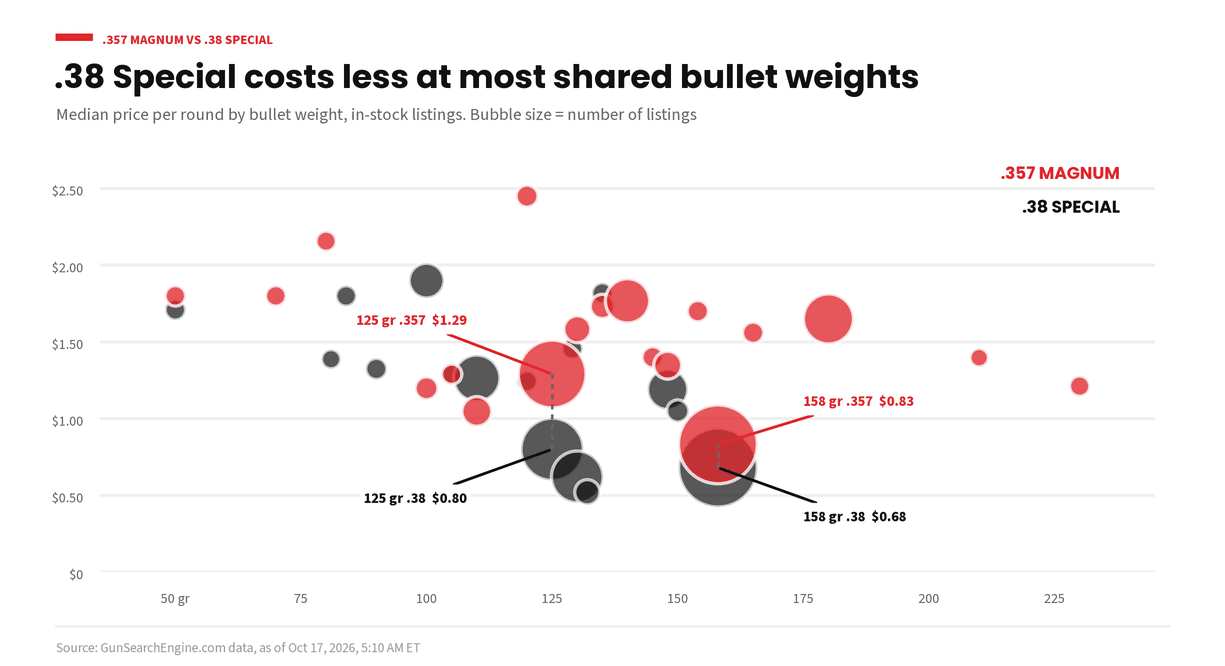
Why a .357 Magnum revolver can shoot .38 Special but not the other way around, how recoil compares, and how to pick loads for the range or for defense.
- handgun ammo
- .357 Magnum
- .38 Special
- revolvers
- comparisons
October 17, 2026
Ammo Cost Per Round: How to Compare Boxes Fairly
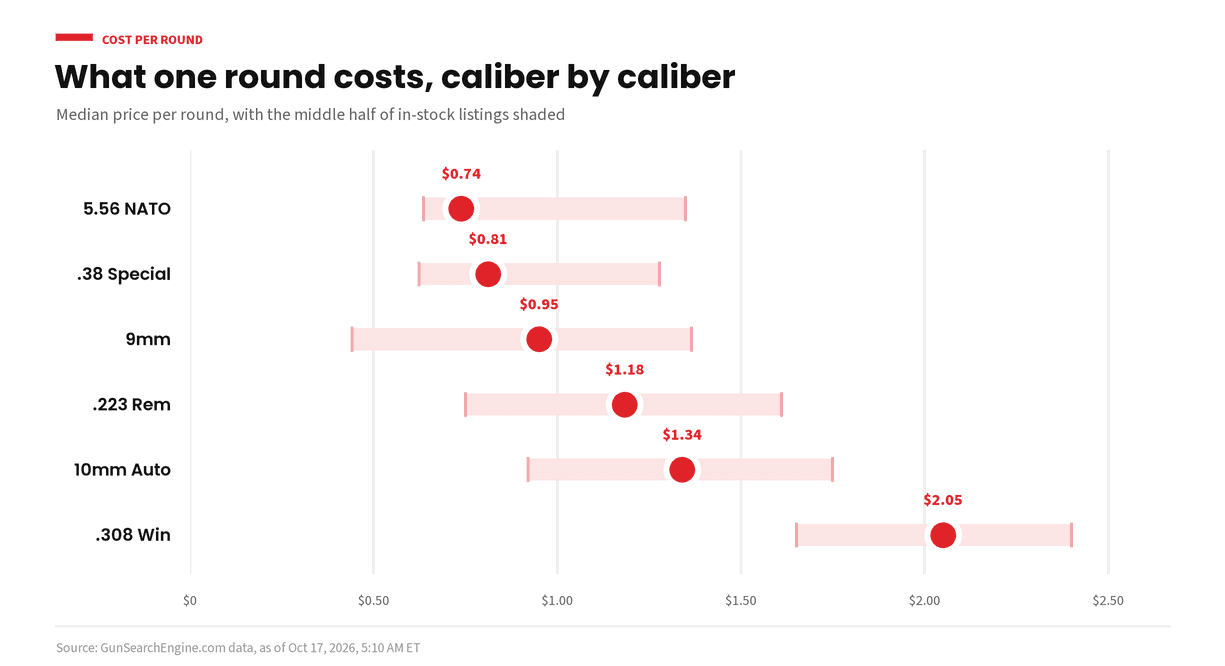
Why the box price can fool you, how to figure cost per round, and what else to compare before you pick an ammo listing.
- ammo
- price per round
- how to compare
October 17, 2026
Ammunition Manufacturers: Who Makes What
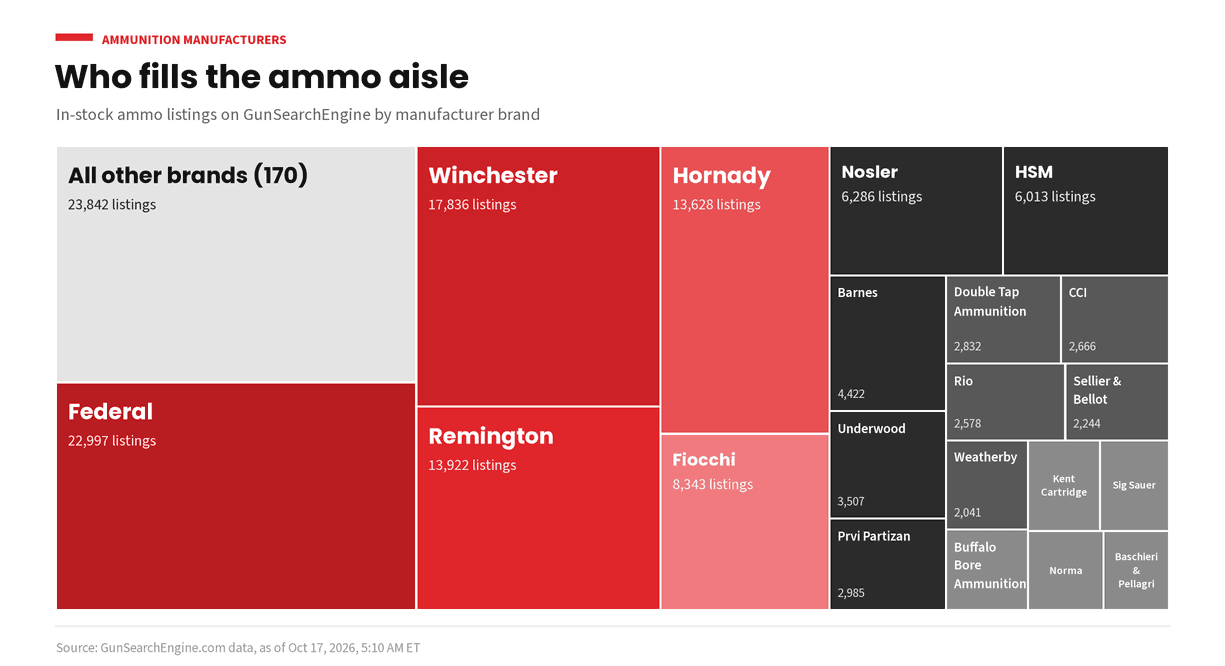
A plain list of well-known ammunition makers, where they are based and what they are known for, with a link to each brand's live listings.
- ammo
- brands
- manufacturers
October 17, 2026
Gun Manufacturers A to Z: Who Makes What
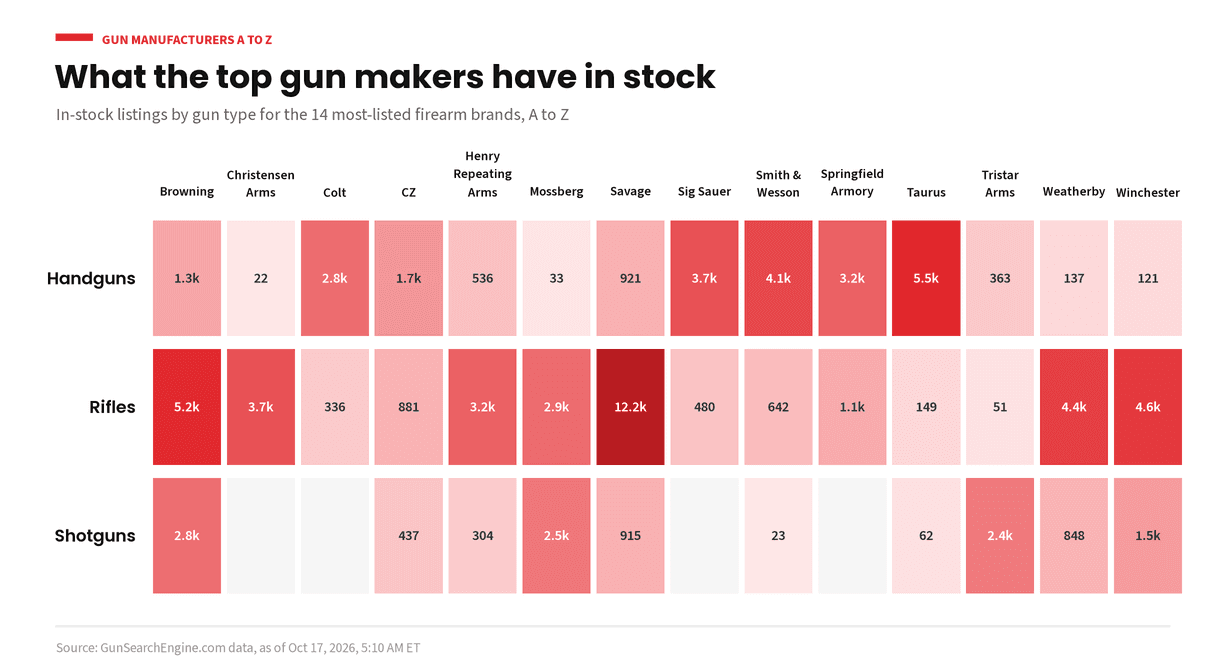
An A to Z list of well-known gun makers, where they are based and what they are known for, plus how to read a model name, with a link to each brand's live listings.
- guns
- brands
- manufacturers
October 17, 2026
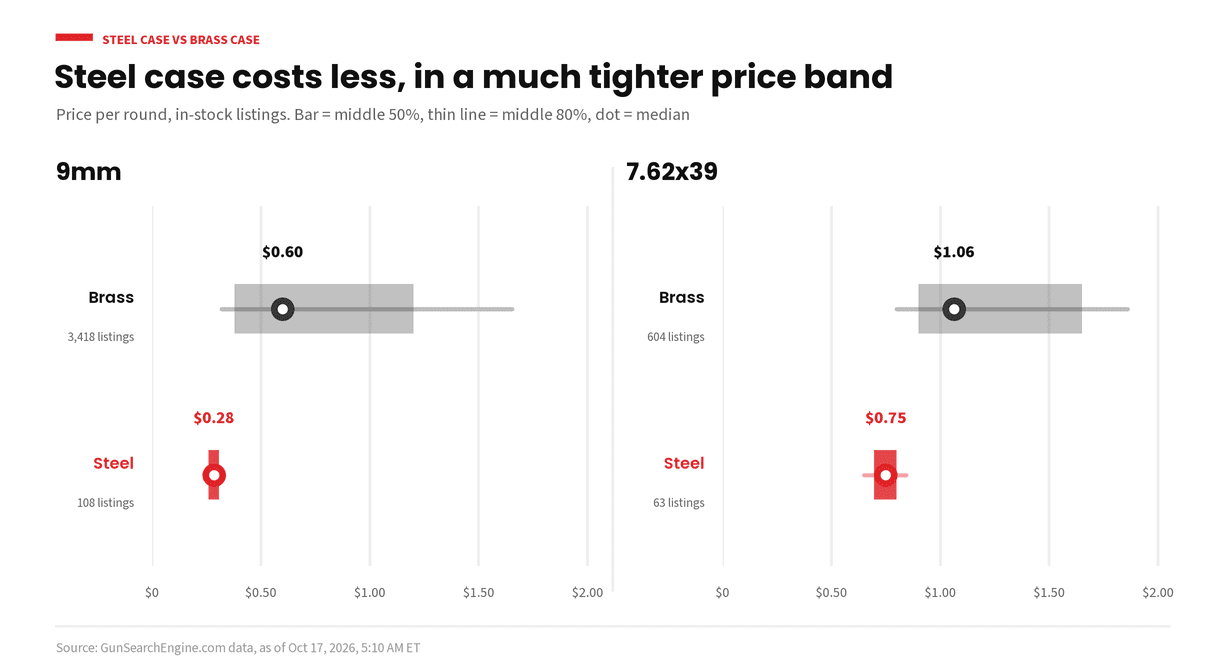
Steel-Case vs Brass-Case Ammo: What to Know
What steel-case ammo is, why it costs less, the common worries about extraction, range rules and reloading, and when brass is the better pick.
- ammo
- steel case
- brass case
- comparisons
October 15, 2026
Mobile shoppers, AI crawlers, and why Gun Search Engine leans in
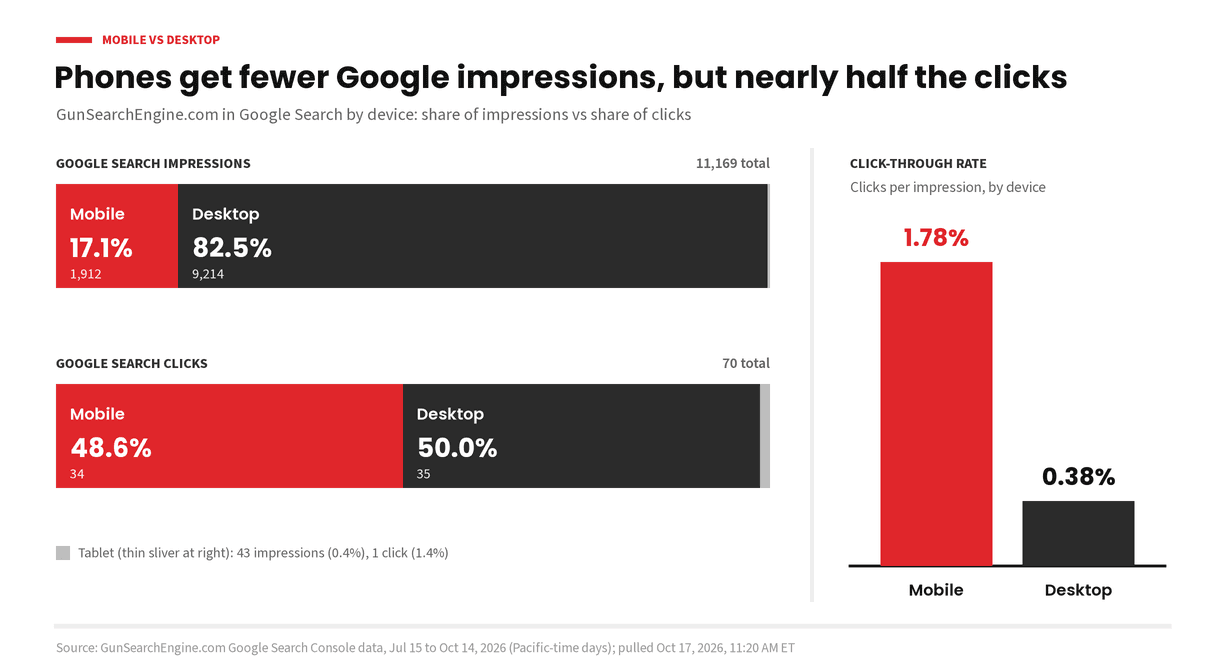
People shop on phones. AI assistants crawl and summarize the aisle. Gun Search Engine is built for both: a mobile-first card UI and AI discovery that is welcome, not blocked.
- mobile
- AI discovery
- shopping hubs