

Blog
20 Gauge vs 12 Gauge: Which Shotgun Fits You?
Gun Search Engine·
- shotguns
- 20 gauge
- 12 gauge
- comparisons
Most people shopping for a shotgun end up choosing between a 20 gauge and a 12 gauge. Both break clays. Both take birds. Both can sit by the bed for home defense. The real difference is how much gun and how much kick you want to live with.
What the gauge number means
Gauge is an old measure. It counts how many lead balls the size of the bore it takes to make a pound. More balls means a smaller bore.
So the 12 gauge has the wider barrel and the 20 gauge has the narrower one. A 12 gauge shell holds more shot. A 20 gauge shell holds less, and it pushes back less when you pull the trigger.
“The smaller number is the bigger gun.”
Recoil and weight
A 20 gauge kicks less. Most 20 gauge guns are also lighter and slimmer, so they are easier to carry all day in the field and easier to swing for a smaller shooter.
A 12 gauge kicks harder, but the extra weight of most 12 gauge guns soaks up some of it. A gas-operated semi-auto softens recoil further in either gauge. A light pump in 12 gauge with heavy loads is the hardest-kicking setup of the bunch.
Fit matters as much as gauge. A gun that is too long in the stock will hit you harder than it should. Many makers sell compact or youth stocks, and some guns let you add spacers as a young shooter grows.
Who each gauge suits
- New shooters and smaller frames: a 20 gauge is the usual starting point. Less kick means more practice and better habits.
- Upland birds and walking hunts: a 20 gauge is light to carry and has plenty of punch at typical upland distances.
- Clays: both work. A 12 gauge with light target loads is the common pick for long sessions, and a 20 gauge is a good fit for lighter shooters.
- Waterfowl and turkey: a 12 gauge is the common choice. It carries heavier loads of the non-toxic shot many waterfowl areas require.
- Home defense: both are used. A 12 gauge carries more per shell. A 20 gauge is easier for some people to control and follow up with.
“Pick the gauge you will practice with, not the one that wins arguments.”
Shell choices
Both gauges come in birdshot, buckshot and slugs. The 12 gauge has the widest range of loads, from light target shells to heavy waterfowl and turkey loads. The 20 gauge list is shorter but covers what most shooters need.
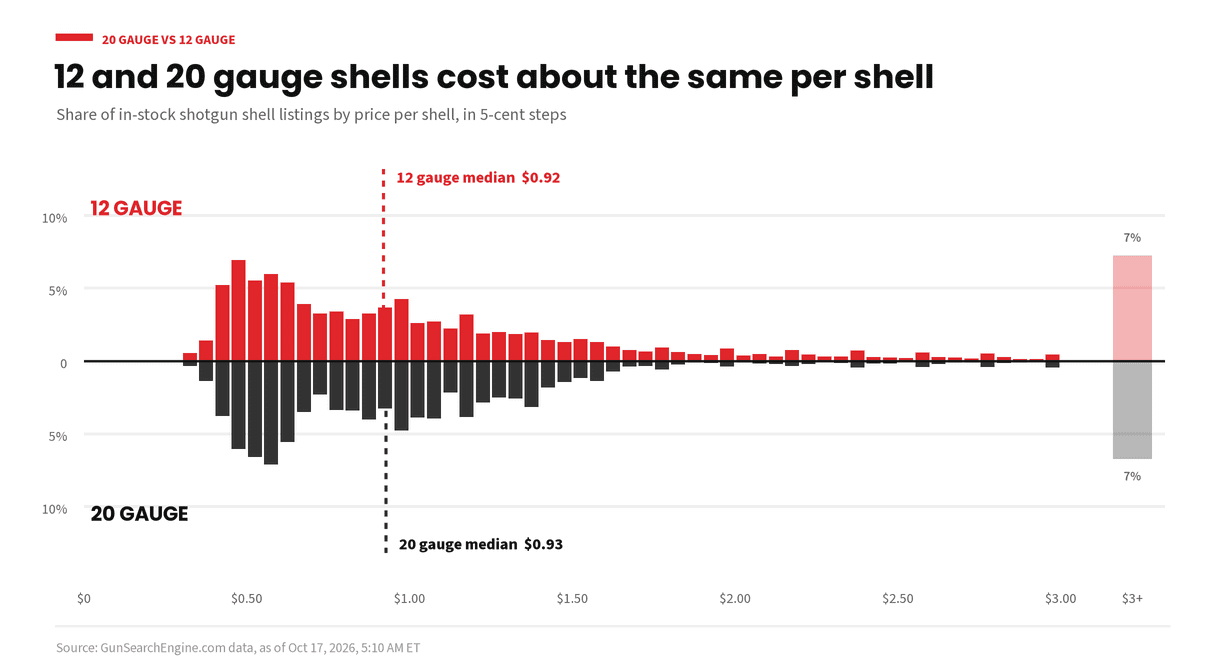
Cost per shell is closer than many people expect. In our listings, the middle price for 12 gauge and 20 gauge shells lands in about the same place, as the chart at the top shows. Load type matters far more than gauge. Target shells cost the least, and premium turkey and waterfowl loads cost the most in both gauges.
Compare live shells on the 20 gauge ammo and 12 gauge ammo pages. Sort by price per shell so a big case and a small box line up fairly.
A safety note on mixed shells
Never carry both gauges loose in the same pocket or bag. A 20 gauge shell can slide past the chamber of a 12 gauge and stick in the barrel. If a 12 gauge shell is then loaded and fired behind it, the barrel can burst. Many 20 gauge shells are yellow for this reason, but not all of them are. Keep them apart.
“Keep your shells sorted. Mixing them is how accidents start.”
How to pick your first shotgun
- Decide the main job first: clays, birds, waterfowl or home defense.
- If recoil worries you, or the shooter is young or small, start with a 20 gauge.
- If you want one gun for waterfowl, turkey and everything else, a 12 gauge covers the most ground.
- Handle a few guns if you can. Check that the stock fits and the gun points where you look.
- Compare makers on pages like Mossberg 20 gauge, Beretta 20 gauge and Benelli shotguns.
When you are ready to look, see live 20 gauge shotgun listings or see live 12 gauge shotgun listings. Gun Search Engine shows what dealers have in stock right now, so you can compare before you visit or order.
Where to shop
Shop the hubs
Browse live stock, or list inventory if you sell.
Related posts
October 18, 2026
How to Buy a Suppressor: A Plain-English Guide to How It Works Now
How getting a suppressor works now that the federal tax is zero and federal registration is not being enforced, what your local dealer still does, and what to ask first. Per ATF guidance as of October 2026.
- suppressors
- nfa
- buying guide
October 18, 2026
Do You Still Need a Form 4 or Tax Stamp for a Suppressor? What Changed in 2026
The federal suppressor tax is zero and ATF is no longer enforcing federal approval and registration for suppressors. Here is what changed, what your dealer still does, and when a Form 4 still matters. Per ATF guidance as of October 2026.
- suppressors
- nfa
- form 4
- tax stamp
October 17, 2026
10mm Auto Explained: Full-Power, Subsonic and the Pistols That Shoot It
What the 10mm Auto cartridge is, how it relates to .40 S&W, the difference between full-power, lighter and subsonic loads, and what to look for in a 10mm pistol.
- ammo
- 10mm
- handguns
- calibers
October 17, 2026
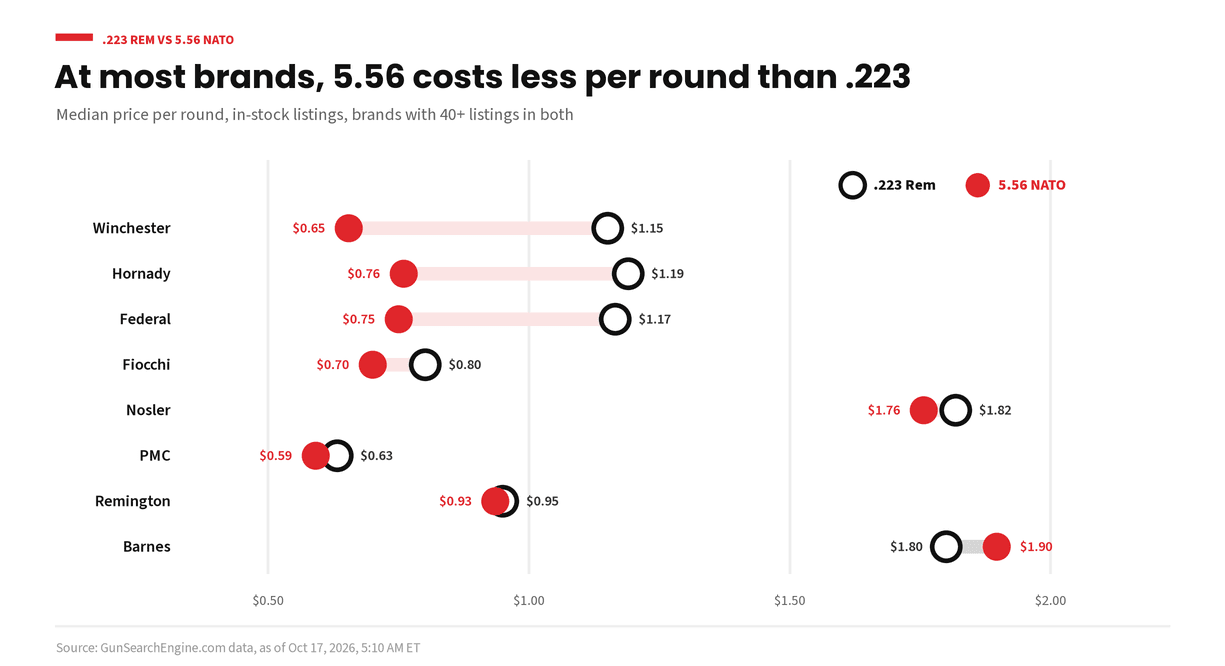
.223 Remington vs 5.56 NATO: What's the Difference?
The .223 Remington and 5.56 NATO look the same but are loaded and chambered differently. Here is which rifles can safely shoot which round.
- rifle ammo
- .223 Remington
- 5.56 NATO
- comparisons
October 17, 2026
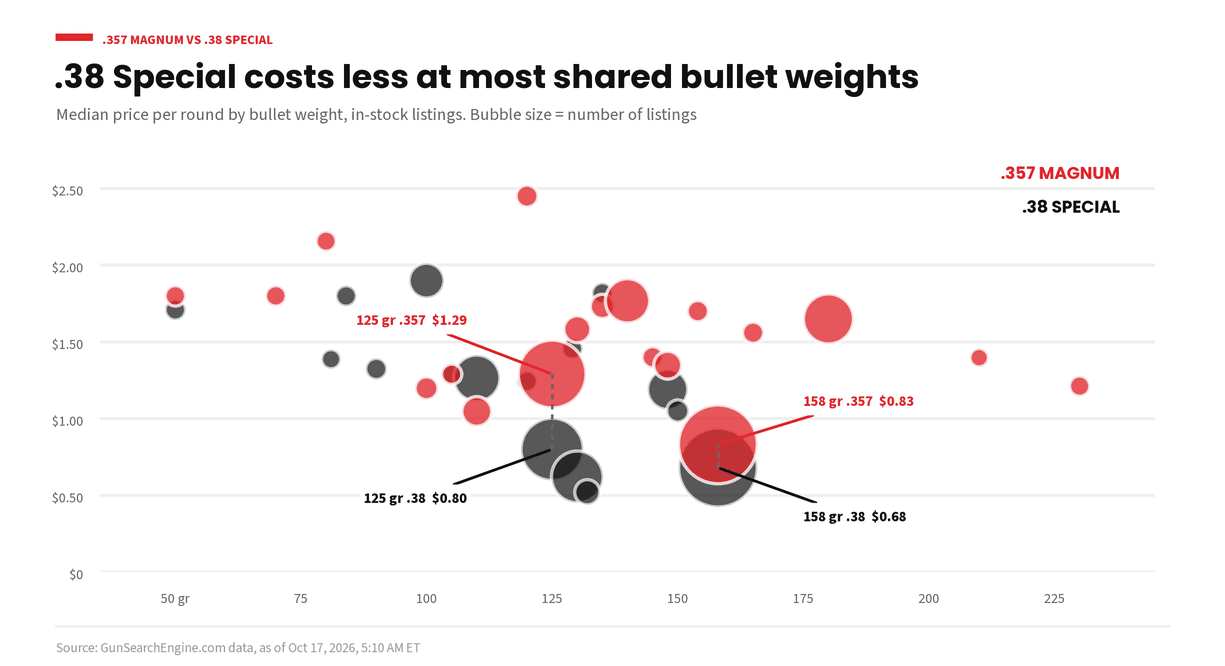
.357 Magnum vs .38 Special: What's the Difference?
Why a .357 Magnum revolver can shoot .38 Special but not the other way around, how recoil compares, and how to pick loads for the range or for defense.
- handgun ammo
- .357 Magnum
- .38 Special
- revolvers
- comparisons
October 17, 2026
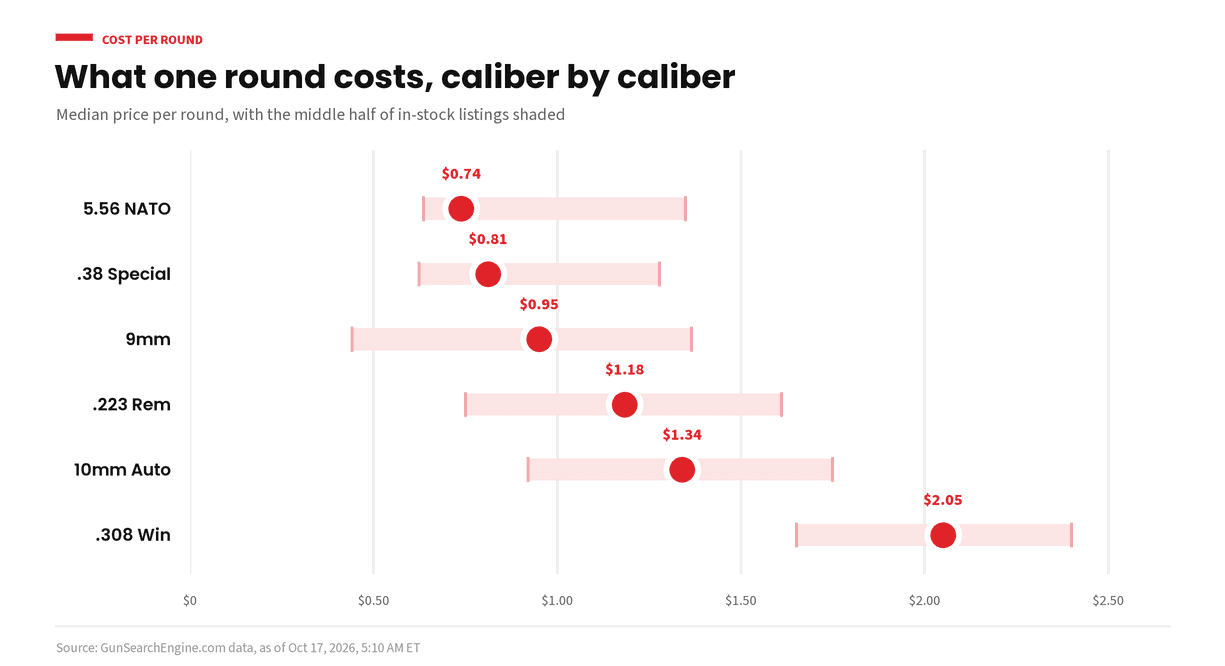
Ammo Cost Per Round: How to Compare Boxes Fairly
Why the box price can fool you, how to figure cost per round, and what else to compare before you pick an ammo listing.
- ammo
- price per round
- how to compare
October 17, 2026
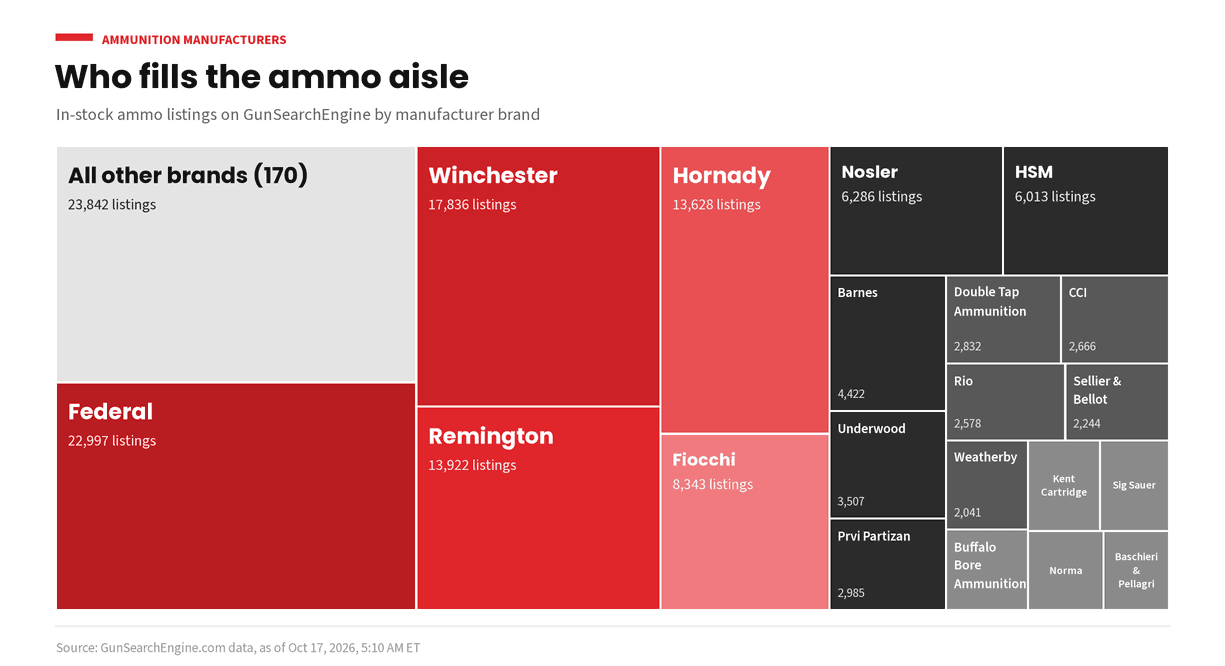
Ammunition Manufacturers: Who Makes What
A plain list of well-known ammunition makers, where they are based and what they are known for, with a link to each brand's live listings.
- ammo
- brands
- manufacturers
October 17, 2026
Gun Manufacturers A to Z: Who Makes What
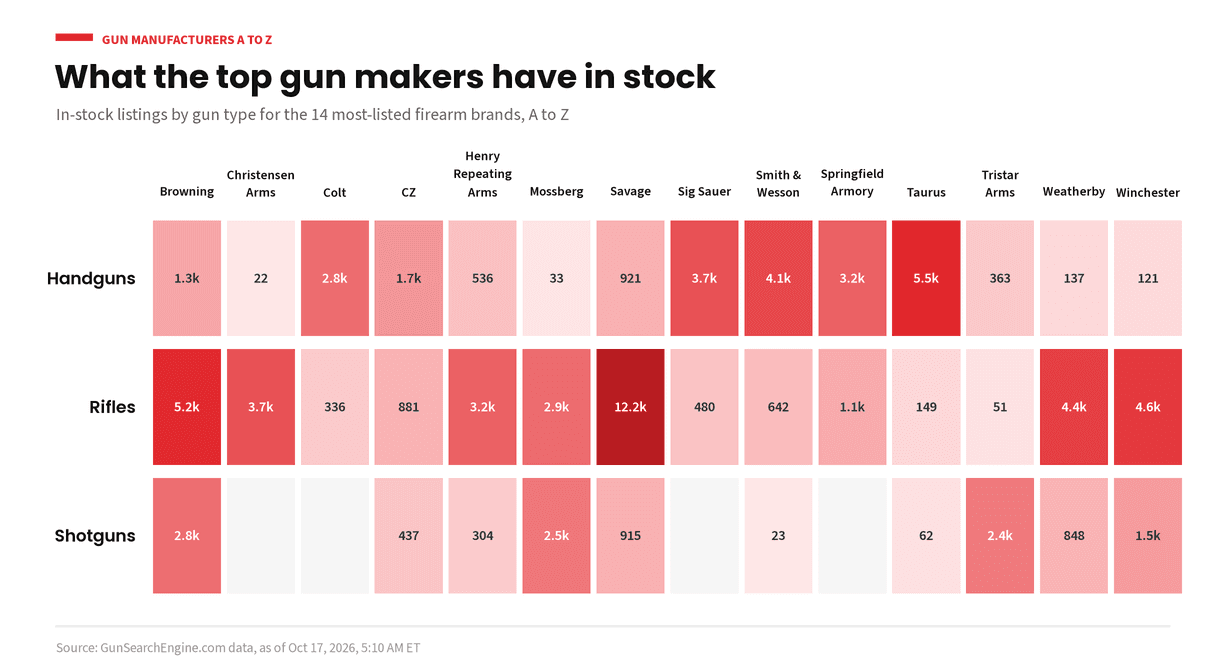
An A to Z list of well-known gun makers, where they are based and what they are known for, plus how to read a model name, with a link to each brand's live listings.
- guns
- brands
- manufacturers
October 17, 2026
Steel-Case vs Brass-Case Ammo: What to Know
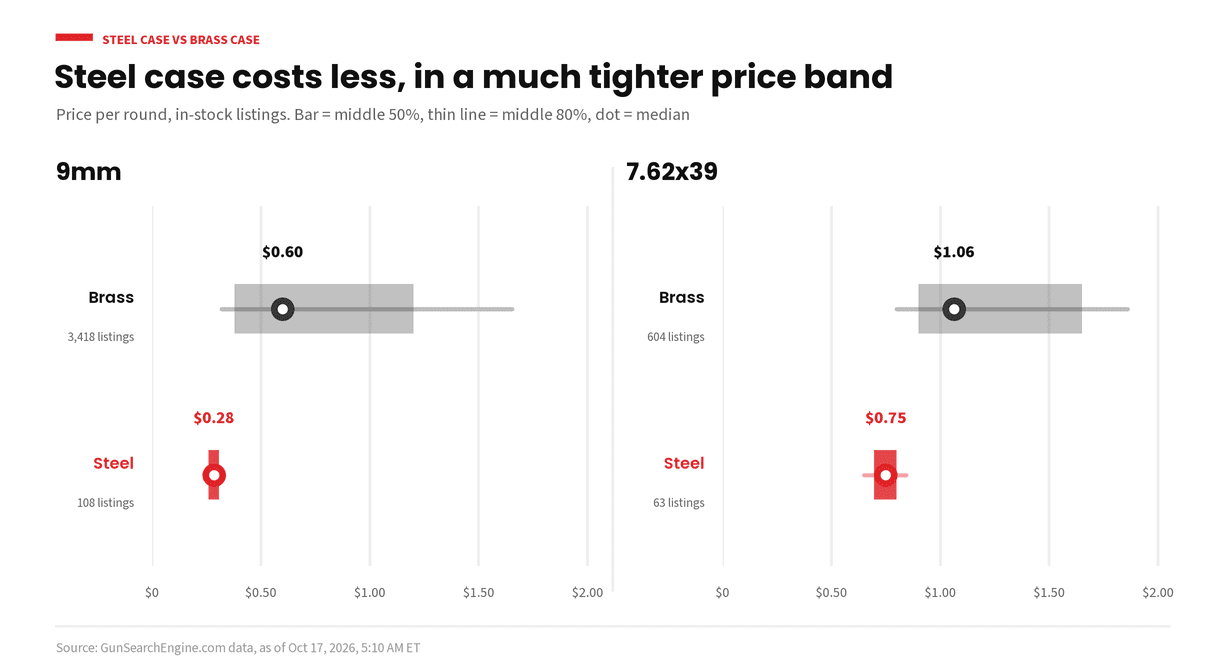
What steel-case ammo is, why it costs less, the common worries about extraction, range rules and reloading, and when brass is the better pick.
- ammo
- steel case
- brass case
- comparisons
October 15, 2026
Mobile shoppers, AI crawlers, and why Gun Search Engine leans in
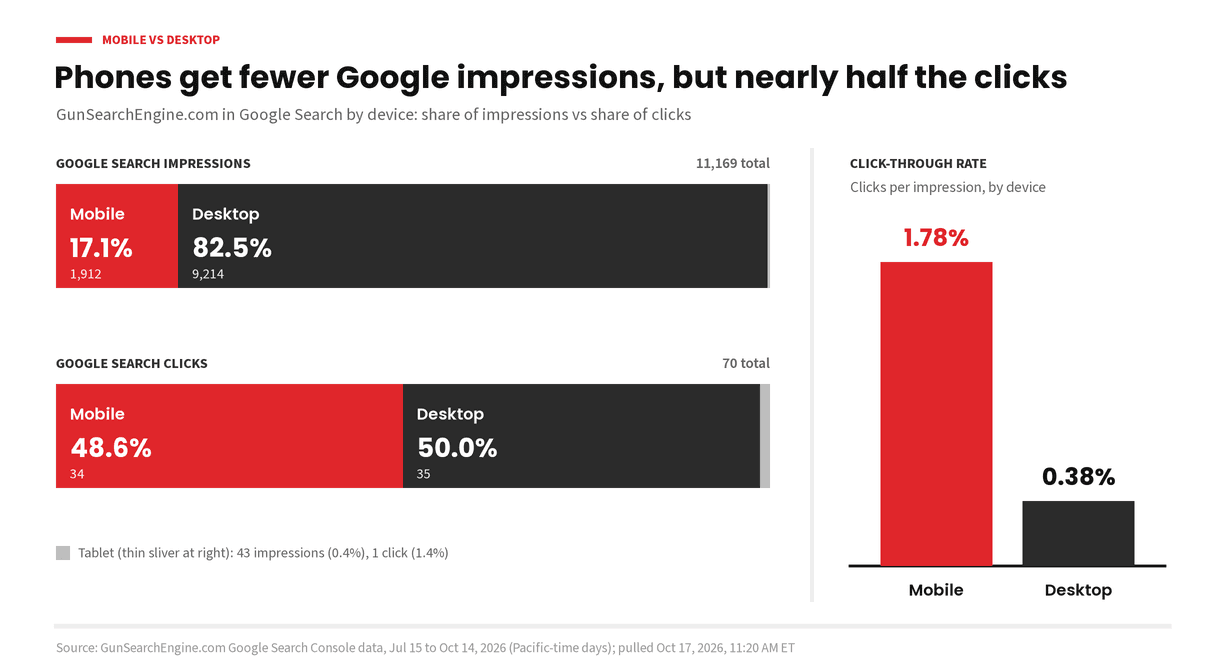
People shop on phones. AI assistants crawl and summarize the aisle. Gun Search Engine is built for both: a mobile-first card UI and AI discovery that is welcome, not blocked.
- mobile
- AI discovery
- shopping hubs